
Osaka has long carried the nickname “the nation’s kitchen,” a title dating back to the Edo period when the city served as Japan’s central hub for rice distribution, merchants across the country routing grain shipments through Osaka’s extensive canal network before onward distribution to Tokyo and beyond, a logistics role that made Osaka one of the wealthiest and most commercially significant cities in pre-modern Japan even without holding formal political capital status.
That merchant history shaped a distinctly food-focused local culture that persists strongly today, Osaka is widely regarded within Japan as the country’s most food-obsessed city, home to dishes like takoyaki, octopus-filled batter balls, and okonomiyaki, a savoury grilled pancake, both believed to have originated in or around the city and now closely associated with Osaka’s culinary identity nationwide.
A City Rebuilt Repeatedly, Never Quite the Same Twice
Osaka Castle, one of the city’s most recognisable landmarks, has been destroyed and rebuilt multiple times since its original construction in the 1580s under warlord Toyotomi Hideyoshi, most significantly following its destruction during the 17th-century siege that ended the Toyotomi clan’s power, and again after severe damage during World War II bombing, the current structure a 1931 concrete reconstruction rather than an original wooden building. Osaka itself suffered extensive destruction during Allied bombing campaigns in 1945, and much of the city’s modern layout and infrastructure reflects a substantial postwar rebuilding effort rather than surviving pre-war urban planning.
Dotonbori, Osaka’s famous canal-side entertainment district, developed originally in the 17th century as a theatre district and has since evolved into one of Japan’s most recognisable nightlife strips, its illuminated signs, including the long-running Glico running man billboard first installed in 1935, now serving as an informal symbol of the city itself.
Painting a City Built Around Its Own Appetite
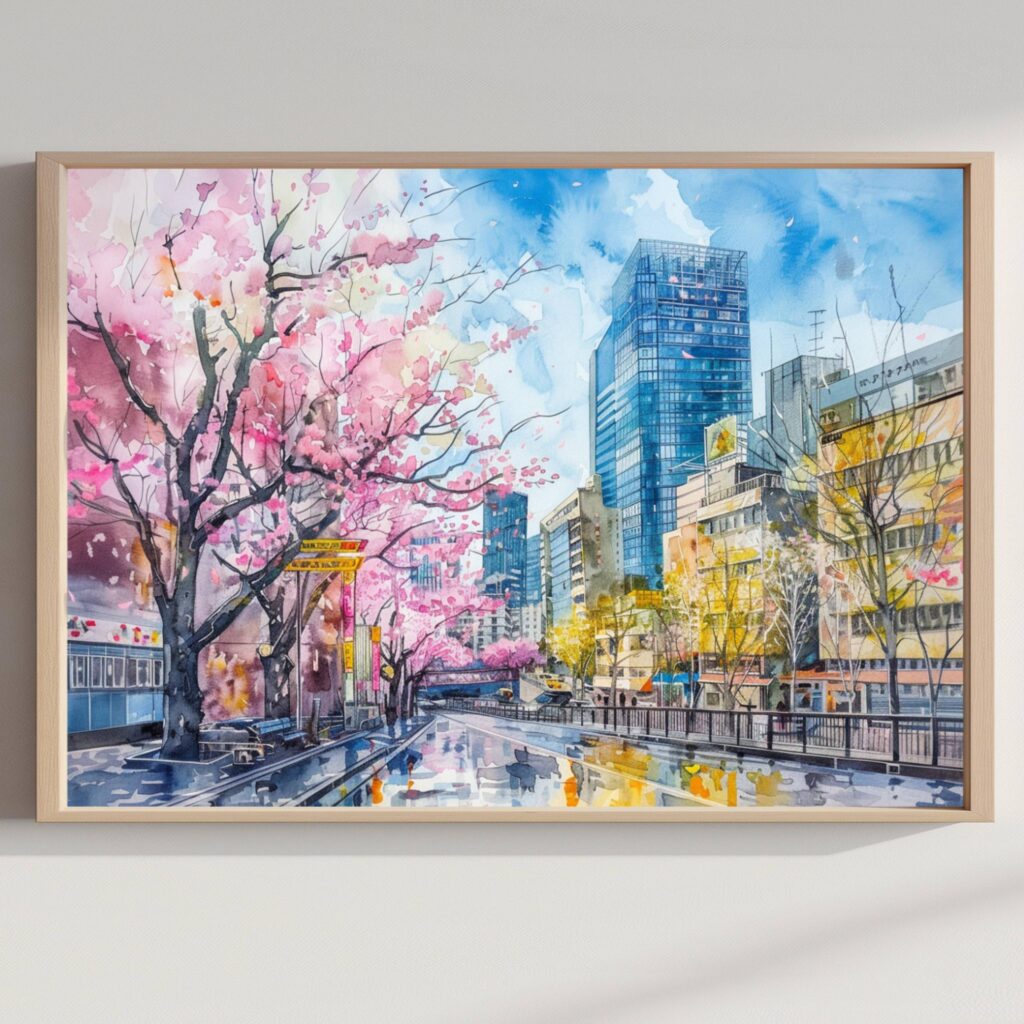
Osaka’s illuminated canal-side streets and layered urban history give a watercolourist vivid colour and lively atmosphere to work with. We’ve captured that character in our own Osaka Watercolor Print, painted first by hand and printed to order on archival paper, a small piece of Japan for a wall at home.
Built on rice and rebuilt more than once by both war and ambition, Osaka remains a city whose merchant instincts have never really faded.