
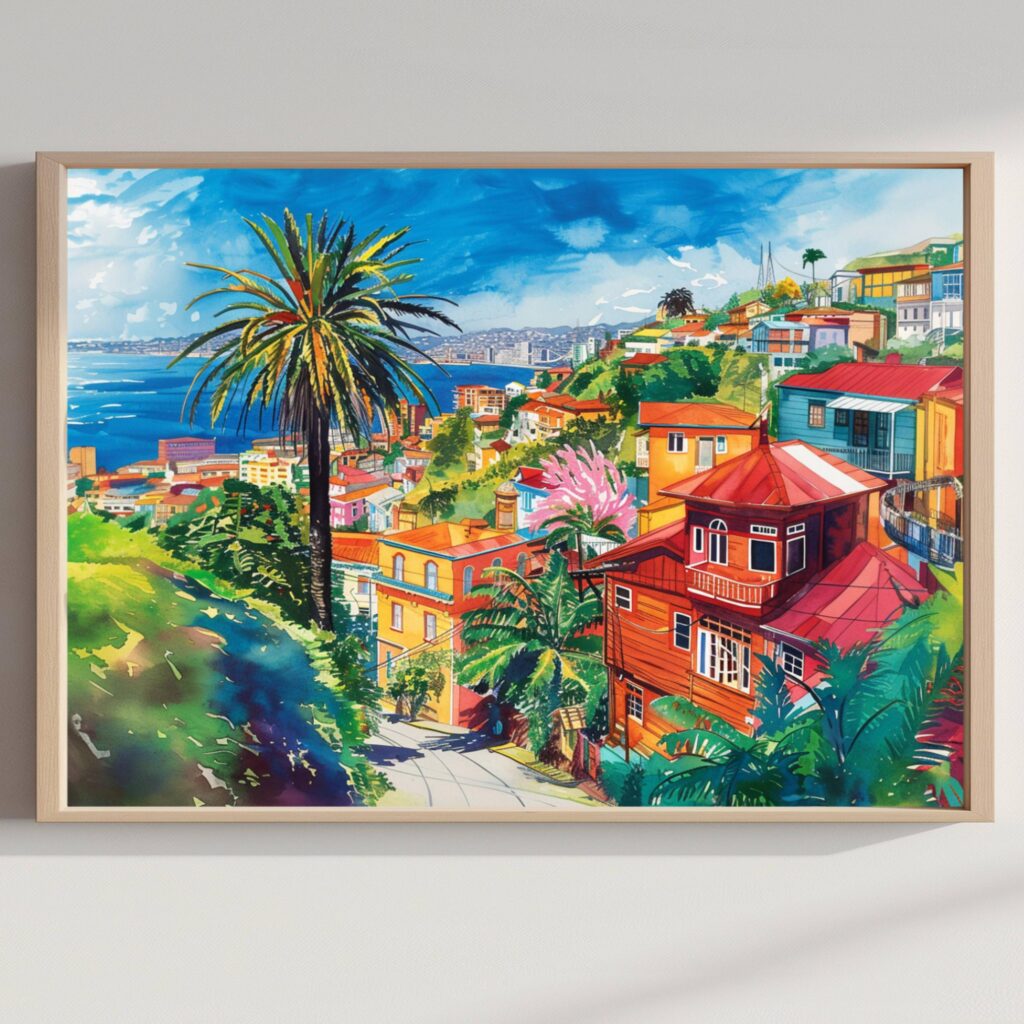
Valparaiso is built across 45 steep hills rising directly from Chile’s Pacific coastline, terrain so unforgiving that rather than levelling it for conventional streets, the city instead developed a network of funicular railways, ascensores, beginning in the 1880s, several of which remain in operation today, carrying residents and visitors up gradients too steep for comfortable walking. That embrace of difficult topography, rather than fighting it, gave Valparaiso its distinctive character, brightly painted houses stacked in seemingly improbable configurations across hillsides that would have been simply cleared in most other port cities.
Before the Panama Canal opened in 1914, Valparaiso was one of the most important ports in the Pacific, a mandatory stop for ships travelling between the Atlantic and Pacific Oceans around Cape Horn, wealth from that maritime trade funding much of the city’s elegant, if now often weathered, 19th-century architecture.
A City That Declined, Then Was Rediscovered Through Its Art
The Panama Canal’s opening devastated Valparaiso’s economy almost overnight, ships no longer needed to round South America at all, and the city entered decades of relative decline, a period that, somewhat paradoxically, helped preserve much of its historic architecture simply because there was little economic pressure to demolish and redevelop it. Valparaiso’s reinvention began substantially through street art, its steep hillside walls have become an enormous, sprawling outdoor gallery, muralists from across Chile and internationally contributing to a scene significant enough that UNESCO cited the city’s cultural and artistic character when designating its historic quarter a World Heritage Site in 2003.
Chilean poet Pablo Neruda maintained one of his homes, La Sebastiana, on a Valparaiso hillside specifically for its panoramic harbour views, the house now preserved as a museum, its quirky, personally curated interior offering direct insight into the poet’s fascination with the chaotic, colourful port city below.
Painting Colour Stacked Against a Harbour
Valparaiso’s brightly painted hillside houses tumbling toward the Pacific give a watercolourist bold, layered colour and dramatic elevation to work with. We’ve captured that character in our own Valparaiso Watercolor Print, painted first by hand and printed to order on archival paper, a small piece of Chile for a wall at home.
Left economically stranded by a canal built on the other side of a continent, Valparaiso remains a city whose decline, oddly enough, is a significant part of why it still looks the way it does.