
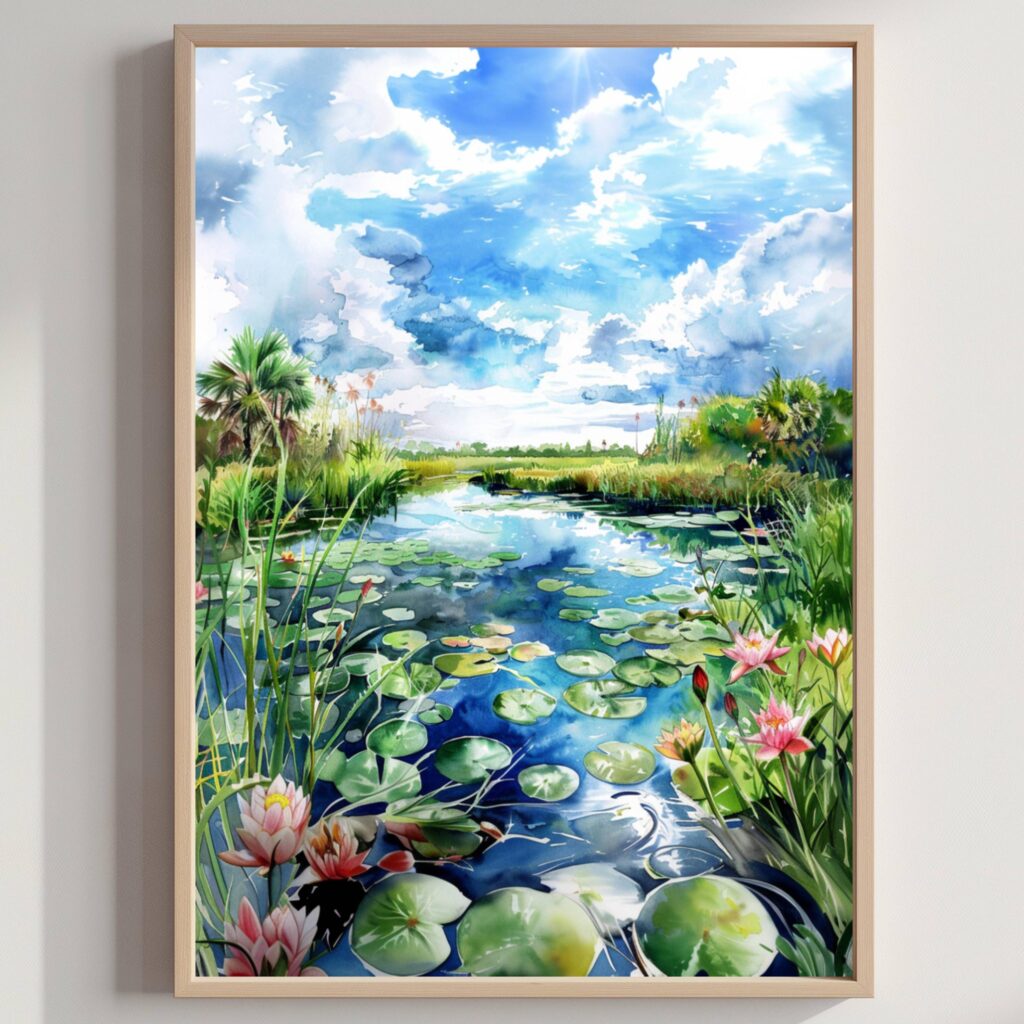
The Everglades is often described not as a swamp but as a genuine river, an extremely wide, extremely shallow one, flowing almost imperceptibly southward from Lake Okeechobee to Florida Bay across a gradient so gentle that the entire system moves at barely a few metres per day, a description early surveyor Marjory Stoneman Douglas popularised in her influential 1947 book “The Everglades: River of Grass,” a title that helped reshape public understanding of the ecosystem as something worth protecting rather than simply draining for agriculture.
That reframing came only after decades of aggressive drainage and development had already destroyed roughly half of the Everglades’ original extent, canals and levees built through the early 20th century diverting water for agriculture and urban growth, changes whose consequences, including significant harm to wildlife and water quality, prompted one of the largest ongoing ecosystem restoration efforts in American history, still actively underway today.
The Only Place Where Alligators and Crocodiles Coexist
The Everglades is the only location in the world where American alligators and American crocodiles naturally coexist, a result of the unique mix of freshwater and saltwater environments found within the park, alligators generally favouring the freshwater marshes while crocodiles tend toward the brackish coastal mangroves, their ranges overlapping in the transitional zones between. That biodiversity extends considerably further, the park protects significant populations of manatees, roseate spoonbills, and the endangered Florida panther, among the rarest and most genuinely elusive large mammals in North America.
The Everglades was designated a UNESCO World Heritage Site, an International Biosphere Reserve, and a Wetland of International Importance, a rare triple recognition reflecting both its ecological significance and the ongoing concern about threats to its survival from continued water diversion and rising sea levels.
Painting Water That Barely Seems to Move
The Everglades’ vast sawgrass marshes and still, mirror-like water give a watercolourist a genuinely quiet, expansive horizon to work with. We’ve captured that stillness in our own The Everglades Watercolor Print, painted first by hand and printed to order on archival paper, a small piece of Florida for a wall at home.
Nearly drained away entirely before anyone thought to call it a river worth saving, the Everglades remains one of America’s slowest, quietest, and most actively contested landscapes.