
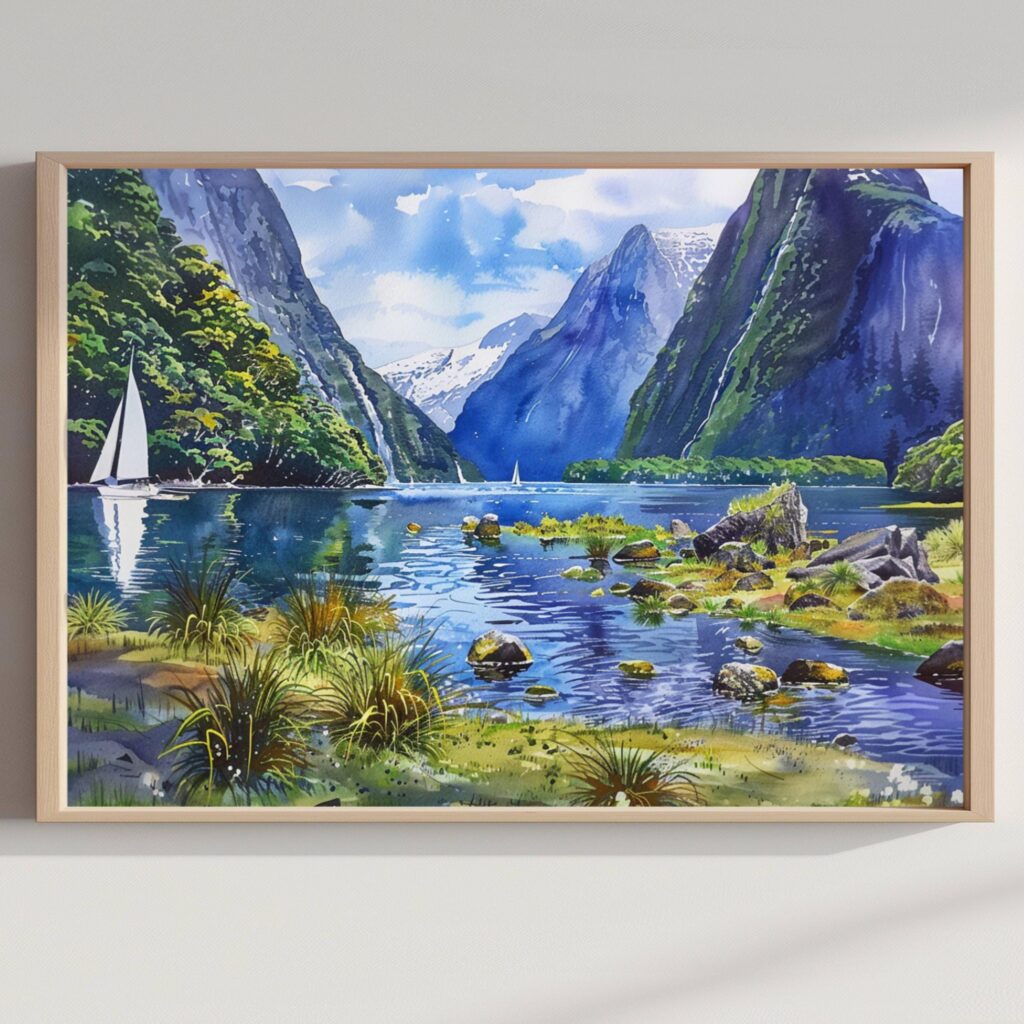
Milford Sound is technically not a sound at all but a fjord, carved by glacial activity during past ice ages rather than formed by river erosion or rising sea levels the way true sounds typically are, an early naming error by European explorers that has simply stuck permanently despite the geological inaccuracy. Its Maori name, Piopiotahi, references the piopio, a now-extinct native bird, and carries its own legend tied to the death of a legendary Maori hero, a name considerably older and, many argue, considerably more fitting than the European alternative that ultimately became official.
Rudyard Kipling once famously, if somewhat hyperbolically, called Milford Sound the “eighth wonder of the world,” a description that has followed the fjord in tourism marketing ever since, its sheer cliffs rising up to 1,200 metres directly from the water, frequently draped in waterfalls fed by some of the highest annual rainfall totals recorded anywhere in New Zealand.
A Landscape Accessible Only Through Genuine Effort
Reaching Milford Sound requires travelling the Milford Road, a genuinely spectacular but weather-dependent route through Fiordland National Park, frequently closed by avalanche risk in winter months, a reminder that the fjord’s dramatic isolation isn’t simply scenic framing but a real, ongoing logistical reality for anyone visiting. Fiordland National Park, protecting Milford Sound and the surrounding wilderness, forms part of New Zealand’s larger Te Wahipounamu UNESCO World Heritage Site, recognised for its exceptional natural beauty and largely untouched temperate rainforest ecosystem.
Despite the fjord’s remote, seemingly untouched appearance, it has become one of New Zealand’s most visited natural attractions, boat cruises navigating beneath its towering cliffs and waterfalls drawing visitors from around the world specifically for a landscape that genuinely lives up to Kipling’s dramatic praise.
Painting Cliffs That Rise Straight From Water
Milford Sound’s sheer cliffs and cascading waterfalls give a watercolourist extraordinary vertical drama and misty atmosphere to work with. We’ve captured that scale in our own Milford Sound Watercolor Print, painted first by hand and printed to order on archival paper, a small piece of New Zealand for a wall at home.
Misnamed by early explorers and still called by the wrong term today, Milford Sound remains a landscape whose grandeur has never actually needed the right label to be believed.