
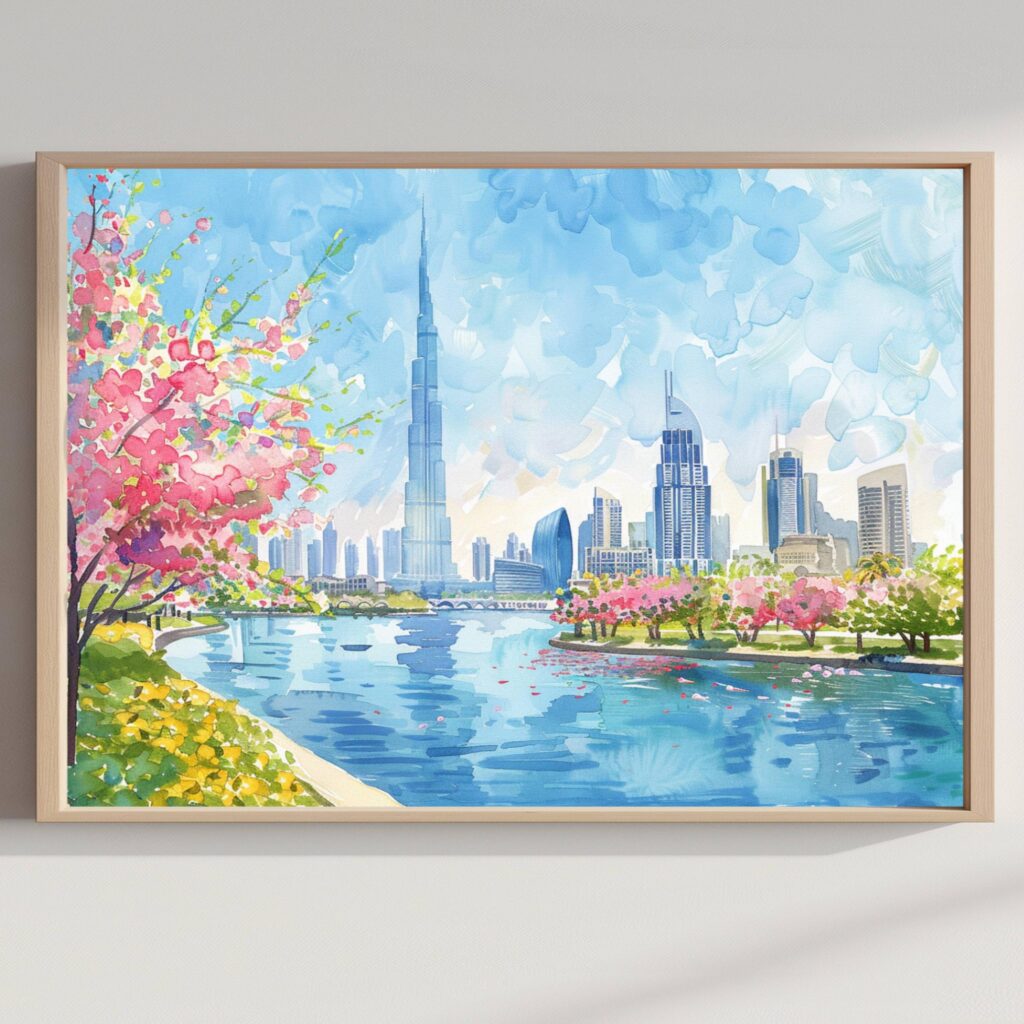
Dubai’s economy, as recently as the early 20th century, rested substantially on pearl diving and fishing, a modest trading port along the Persian Gulf with little to distinguish it from other small settlements in the region, until the discovery of oil in the 1960s provided the initial capital that would eventually fund one of the most dramatic urban transformations in modern history. Crucially, Dubai’s own oil reserves were always comparatively modest, and the emirate’s rulers made a deliberate, forward-looking decision to invest that early oil wealth into diversifying the economy well before reserves could be expected to run low.
That diversification strategy produced the Burj Khalifa, completed in 2010 and standing 828 metres tall, the tallest building in the world by a considerable margin, its design deliberately incorporating patterns from regional desert flowers and Islamic architectural tradition into an otherwise thoroughly futuristic structure.
A City Built Partly by Reshaping the Sea Itself
Dubai’s Palm Jumeirah and similar artificial island developments involved moving hundreds of millions of cubic metres of sand and rock to create entirely new coastline, projects visible from space and among the most ambitious land reclamation efforts ever undertaken, built specifically to expand Dubai’s limited natural waterfront and accommodate its rapid population and tourism growth. The city’s population is overwhelmingly composed of foreign workers and expatriates, Emirati citizens make up a relatively small percentage of Dubai’s total residents, a demographic reality that has shaped the city into one of the most genuinely international urban centres in the Middle East.
Dubai’s older districts, including the historic Al Fahidi neighbourhood along Dubai Creek, still preserve traditional wind-tower architecture and narrow lanes, a deliberately maintained contrast to the futuristic skyline rising just a short distance away.
Painting a Skyline Built From Ambition
Dubai’s futuristic towers rising from desert and sea give a watercolourist bold, dramatic modern scale to work with. We’ve captured that ambition in our own Dubai Watercolor Print, painted first by hand and printed to order on archival paper, a small piece of the UAE for a wall at home.
Built from pearl diving into one of the world’s most recognisable modern skylines within a single lifetime, Dubai remains one of the clearest examples anywhere of a deliberate bet on the future paying off.