
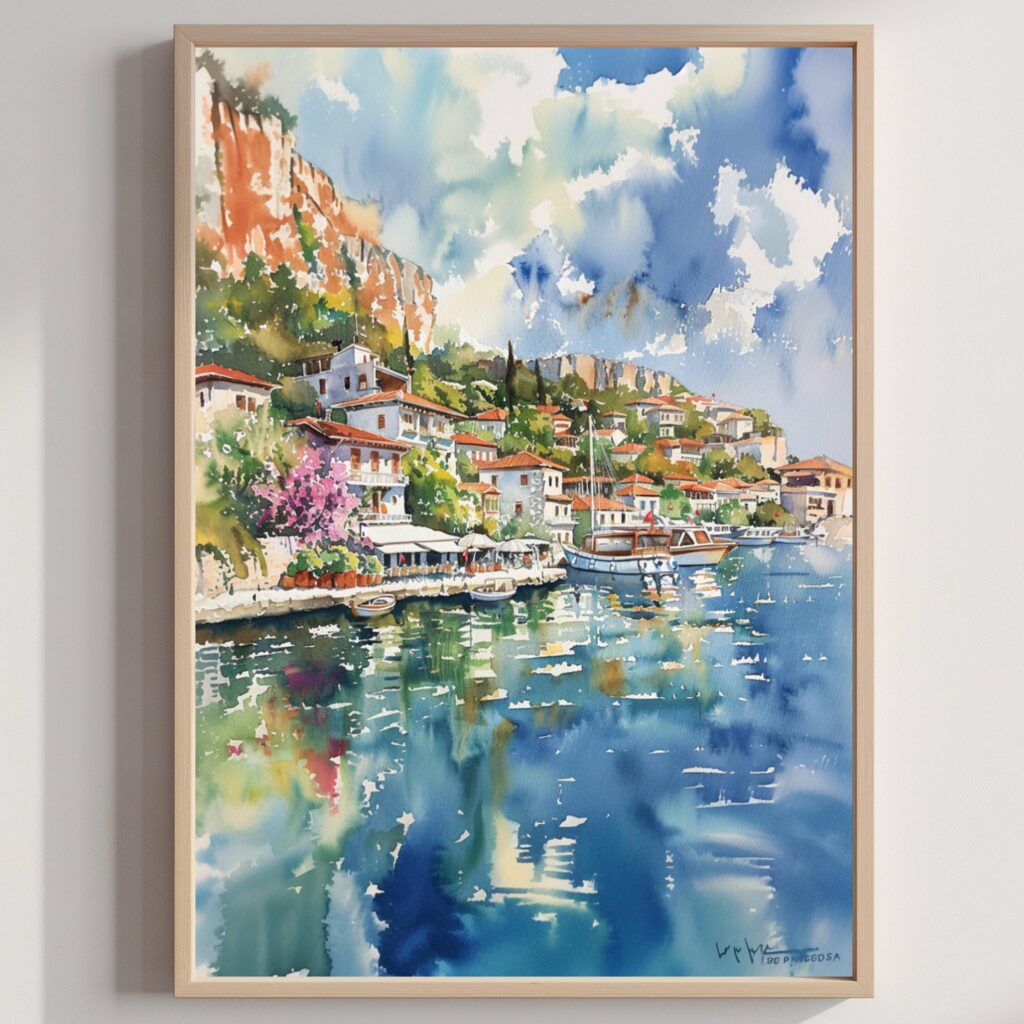
Marmaris owes much of its early strategic development to Suleiman the Magnificent, who used its naturally sheltered, deep-water bay as a staging point for the Ottoman fleet during the 1522 siege of Rhodes, reportedly ordering the town’s castle rebuilt and expanded in just 48 days to prepare for the campaign, a scale of urgency reflecting how genuinely valuable the harbour’s position was considered at the time. That same natural harbour, one of the best-protected anchorages on the Turkish coast, continues to shape Marmaris’s identity today, now filled with private yachts and marinas rather than Ottoman warships.
The surrounding region has been inhabited since antiquity under the name Physkos, part of ancient Caria, and later Rhodes’ sphere of influence given its proximity to that island just across the water, a maritime relationship between Marmaris and Rhodes stretching back well over two thousand years.
A Town Reinvented Repeatedly by Whoever Needed Its Harbour
Marmaris Castle, still standing above the harbour, now houses a museum documenting the town’s layered history, and the surrounding old town retains narrow streets and traditional architecture, even as much of Marmaris has expanded considerably to accommodate modern tourism infrastructure along its extensive coastline. The town’s position at the base of a pine-forested peninsula, combined with its sheltered bay, has made it one of Turkey’s most significant departure points for both larger cruise vessels and smaller traditional gulet sailing charters exploring the nearby Turkish and Greek coastlines.
Marmaris’s climate and vegetation, dense pine forest reaching nearly to the water’s edge, give the town a notably greener, more forested character than some of the more arid Aegean coastal destinations further north, a landscape locals often compare favourably to the Turkish Riviera’s broader reputation.
Painting Pine-Backed Hills and a Sheltered Bay
Marmaris’s pine-forested hills framing its sheltered harbour give a watercolourist a naturally layered coastal composition to work with. We’ve captured that setting in our own Marmaris Watercolor Print, painted first by hand and printed to order on archival paper, a small piece of Turkey for a wall at home.
Rebuilt in weeks for an emperor’s fleet and reshaped since by whoever next needed its harbour, Marmaris remains a town whose value has always come down to the same sheltered stretch of water at its centre.