
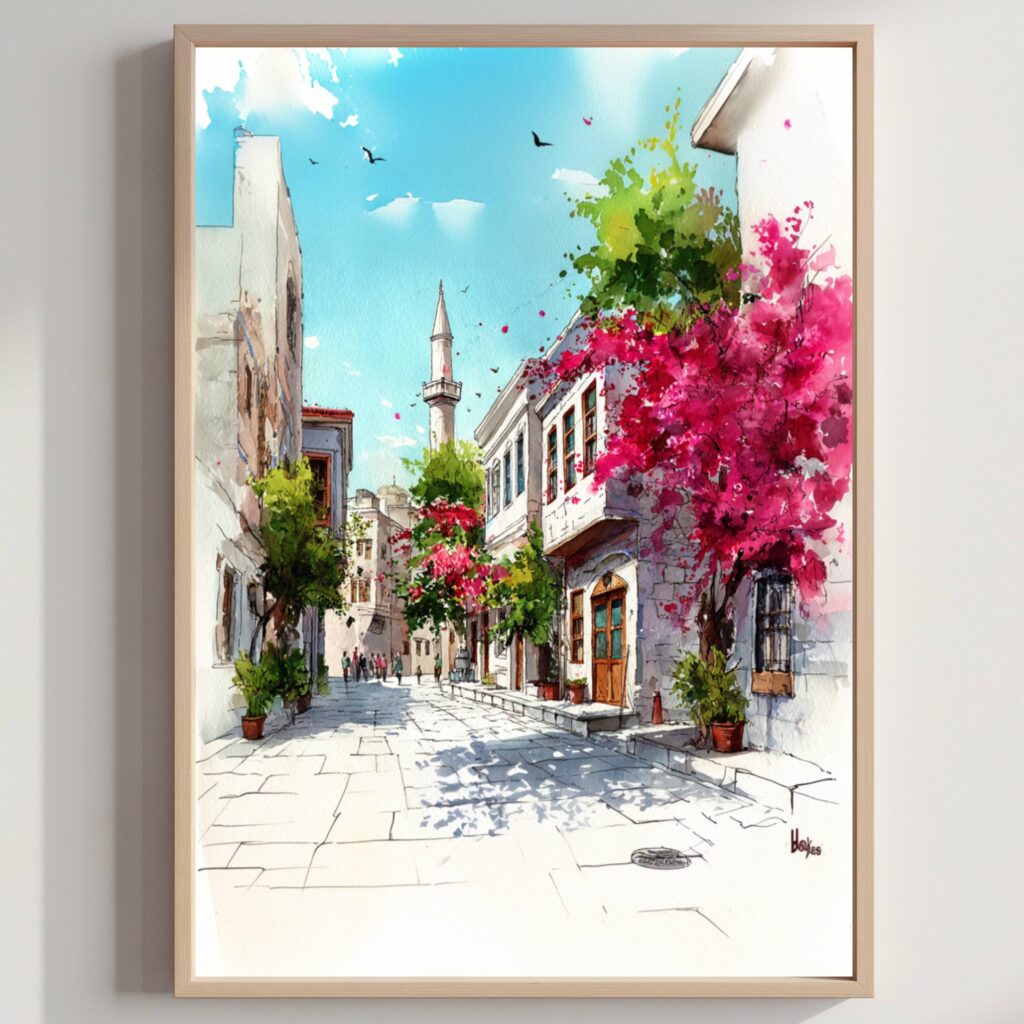
Bodrum sits on the site of ancient Halicarnassus, once home to the Mausoleum of Halicarnassus, a tomb built in the 4th century BCE for Mausolus, a Persian satrap, so extraordinarily grand that it was named one of the Seven Wonders of the Ancient World, and gave the English language its modern word “mausoleum” as a direct result. Little of the original structure survives today, much of its stone was repurposed by Crusader knights in the 15th century to build Bodrum Castle, meaning fragments of one of antiquity’s most celebrated tombs are literally embedded within the walls of the medieval fortress that now dominates the town’s harbour.
That castle, built by the Knights Hospitaller beginning in 1402, now houses the Bodrum Museum of Underwater Archaeology, one of the most significant collections of shipwreck artefacts in the world, recovered from Bronze Age and later shipwrecks found in the waters surrounding the Bodrum peninsula, a region that has proven unusually rich for marine archaeology.
A Fishing Town That Became a Yachting Capital
Bodrum’s transformation from a relatively modest fishing and sponge-diving town into one of Turkey’s most fashionable resort destinations accelerated significantly from the 1970s onward, drawing Turkish writers, artists, and eventually international visitors specifically for its whitewashed architecture, deep blue Aegean coastline, and relaxed atmosphere distinct from more heavily developed Mediterranean resorts. Traditional Bodrum architecture, low whitewashed buildings with flat roofs, was historically shaped by strict local building codes intended to preserve the town’s character, though considerable modern development has expanded well beyond the historic centre in subsequent decades.
The Bodrum peninsula’s coastline remains a significant departure point for the traditional wooden sailing yachts known as gulets, multi-day cruises along the Turkish Riviera that have become one of the region’s signature tourism experiences.
Painting Whitewashed Walls and Castle Stone
Bodrum’s whitewashed buildings against its medieval castle and deep Aegean water give a watercolourist a rich mix of historic and coastal colour to work with. We’ve captured that combination in our own Bodrum Watercolor Print, painted first by hand and printed to order on archival paper, a small piece of Turkey for a wall at home.
Built partly from the stones of a lost Wonder of the Ancient World, Bodrum remains a resort town whose castle walls quietly carry far more history than most visitors realise.