
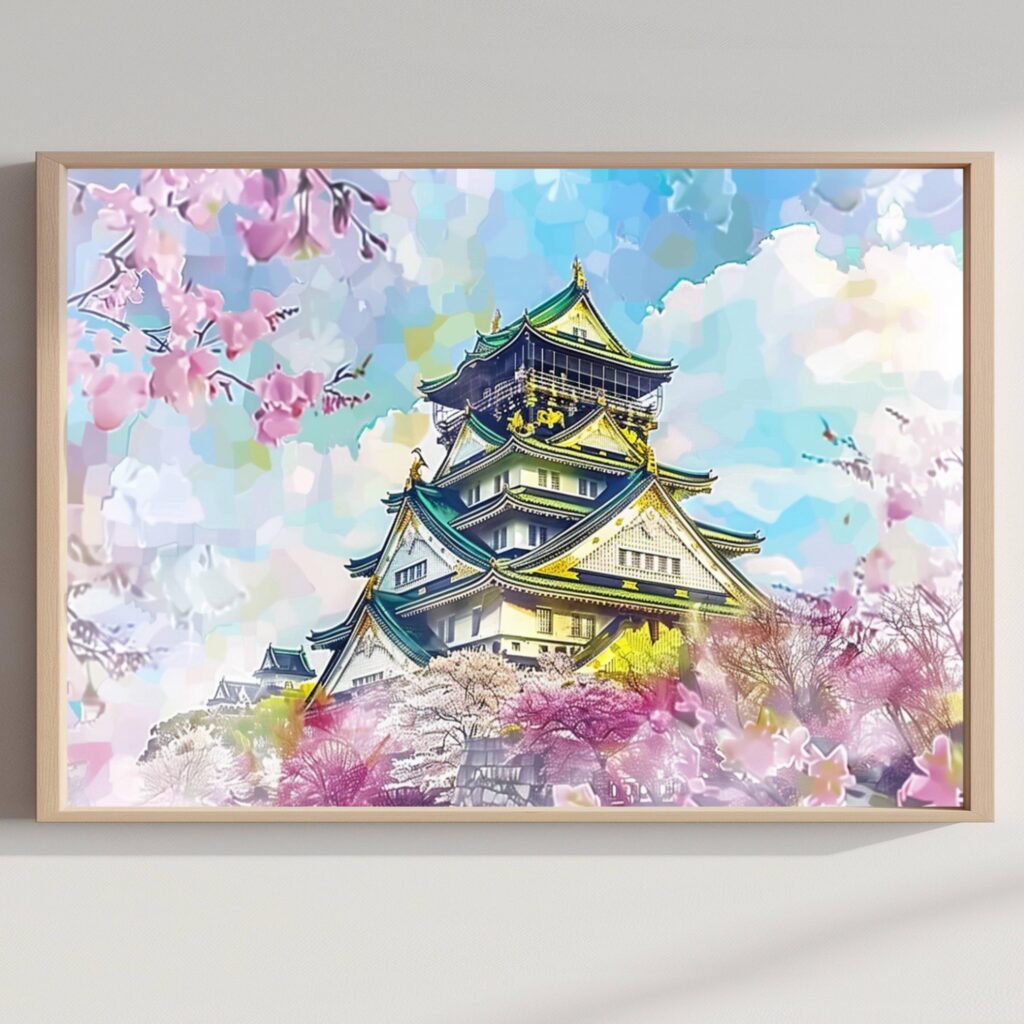
Osaka Castle was originally built in 1583 by Toyotomi Hideyoshi, one of the most powerful warlords in Japanese history, intended as a statement of his ambition to unify Japan following decades of civil conflict. That original castle was destroyed just over three decades later, in 1615, when rival forces under the Tokugawa shogunate besieged and burned it, part of the conflict that ultimately established over 250 years of Tokugawa rule across Japan.
The castle was rebuilt in the 1620s by the victorious Tokugawa shogunate, only to be struck by lightning and burn down again in 1665, after which the site remained without its central keep for over two and a half centuries, the surrounding walls and moats persisting even as the tower itself stayed absent.
A Modern Rebuild Using an Old Silhouette
The current castle tower, completed in 1931, is built from reinforced concrete rather than traditional wood, a deliberate choice that allowed it to survive American bombing raids during the Second World War largely intact, unlike much of the surrounding city. That concrete reconstruction has drawn some criticism from architectural purists over the decades, but it also means Osaka Castle remains one of the more accessible historic sites in Japan, its interior now housing a museum with lifts and modern climate control rather than requiring preservation as an off-limits historic structure.
The castle’s stone walls include some of the largest single stones used in any Japanese castle construction, one block, the Higo-ishi, is estimated to weigh over 100 tonnes, transported and positioned using labour and engineering methods that remain a subject of ongoing historical study.
Painting a Tower That Refused to Stay Down
Osaka Castle’s dark tiered roofs against Japan’s cherry blossoms or autumn colour give a watercolourist rich seasonal contrast to work with. We’ve captured that layered silhouette in our own Osaka Castle Watercolor Print, painted first by hand and printed to order on archival paper, a small piece of Japan for a wall at home.
Burned down twice and rebuilt in concrete the third time, Osaka Castle remains a monument that has simply refused, across four centuries, to stay destroyed for long.