
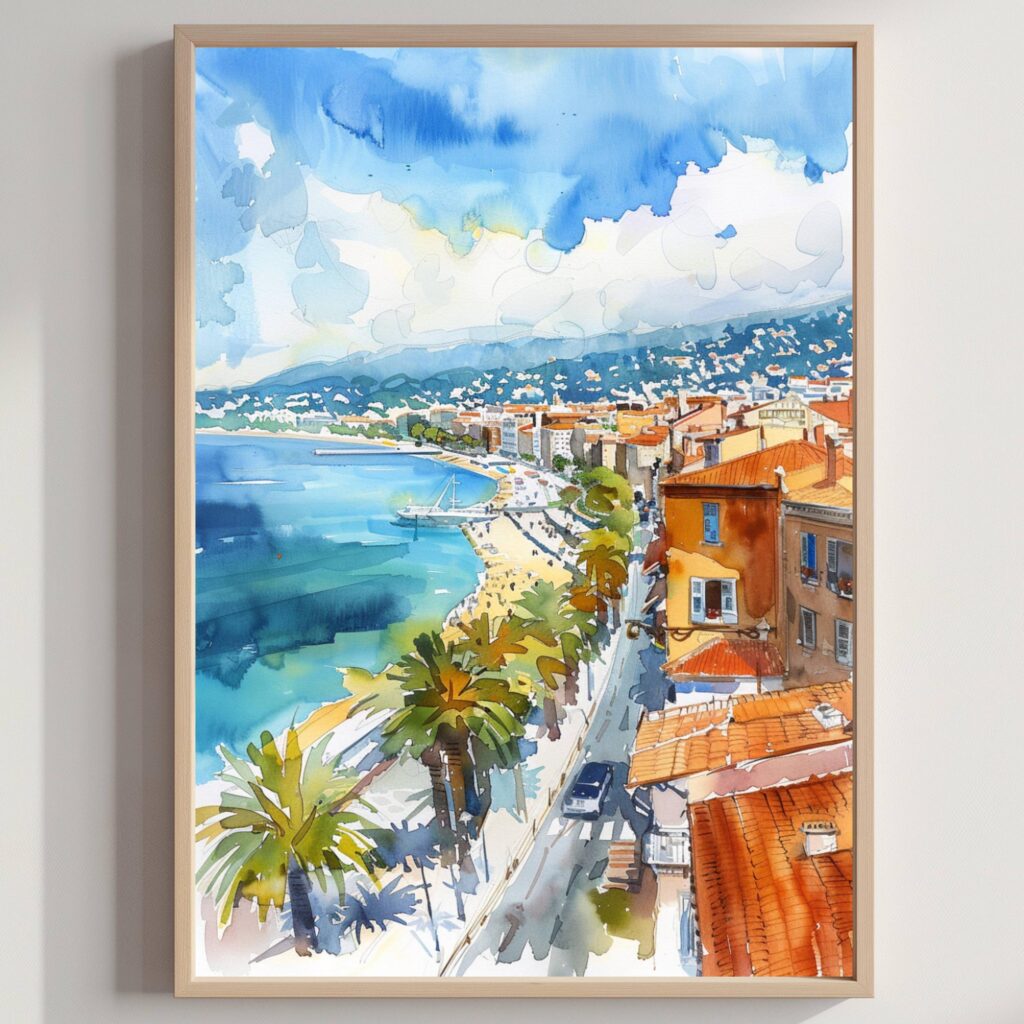
Nice’s famous Promenade des Anglais, the palm-lined waterfront walkway that defines the city’s image today, was originally funded in the 1820s by wealthy English residents wintering in the city, part of a broader trend of European aristocracy, and later Russian nobility, treating the French Riviera as a fashionable winter escape from colder northern climates long before it became a summer beach destination. That aristocratic influence shaped much of Nice’s grand Belle Epoque architecture, including the Hotel Negresco, opened in 1913 and still one of the most recognisable landmarks along the promenade.
Nice’s Russian Orthodox Cathedral, the largest such cathedral outside Russia, reflects that same period’s wealthy foreign influence, built in the early 20th century for the substantial community of Russian aristocrats who wintered in the city before the 1917 Russian Revolution abruptly ended that particular chapter of Riviera history.
A City That Only Became French Relatively Recently
Nice was part of the Kingdom of Sardinia rather than France for much of its history, only becoming officially French in 1860 following a treaty and subsequent referendum, a relatively recent addition to French territory that helps explain the city’s distinctly Italian-influenced Old Town architecture and Nicois dialect, closer in some respects to Italian and Provencal than to standard French. That layered identity is still visible in Vieux Nice, its Old Town, with narrow ochre-coloured buildings and a bustling produce market at Cours Saleya feeling markedly different from the grander Belle Epoque promenade nearby.
Nice’s famous pebble beaches, rather than sand, are a natural feature of the coastline’s geology, smoothed stones washed down from the surrounding Alps over millennia, a detail that occasionally surprises visitors expecting the sandy beaches more typical of other Mediterranean resort towns.
Painting Ochre Streets Against the Mediterranean
Nice’s warm ochre Old Town buildings against the deep blue of the Mediterranean give a watercolourist rich, sun-washed colour to work with. We’ve captured that Riviera light in our own Nice Watercolor Print, painted first by hand and printed to order on archival paper, a small piece of the French Riviera for a wall at home.
Built up largely by aristocrats fleeing winter and only French for a little over 150 years, Nice remains a city whose Mediterranean charm was, in large part, imported rather than always its own.