
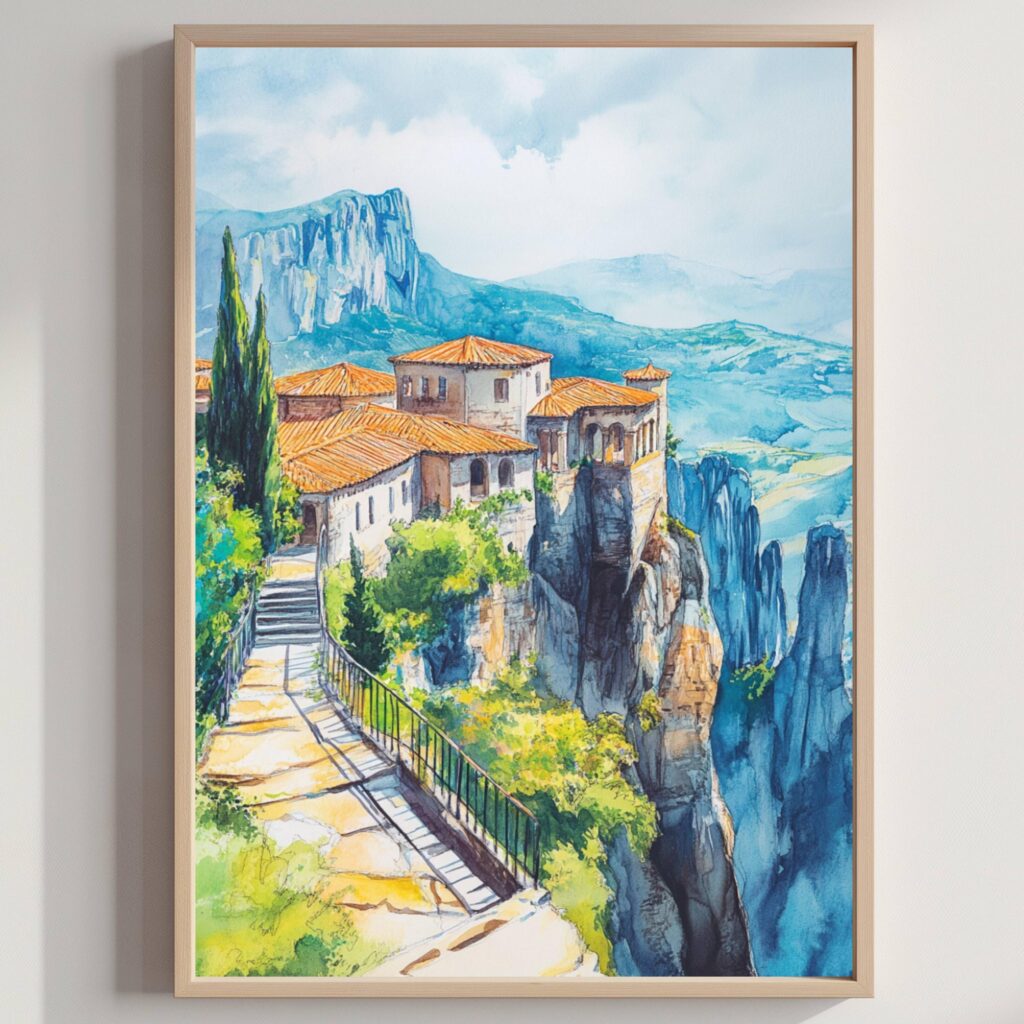
Meteora’s monasteries sit atop towering sandstone pillars, some rising over 400 metres, formations created roughly 60 million years ago by river sediment deposits later shaped by wind, water, and earthquakes into the dramatic vertical rock towers visible today. Monks began settling the area as early as the 9th century, drawn specifically by the site’s near-total inaccessibility, a defensive and spiritual isolation that protected them both from raiders and from the ordinary distractions of daily life below.
For centuries, the only way to reach several of the monasteries was via removable rope ladders or nets hauled up by hand-cranked winches, monks and supplies alike raised and lowered hundreds of metres above the valley floor, a system deliberately kept difficult and occasionally replaced entirely, according to one famous account, only “when the rope broke.”
From 24 Monasteries to Six Still Standing
At its peak in the 16th century, Meteora held 24 active monasteries, though only six remain today, some still home to small communities of monks and nuns continuing centuries-old religious traditions, while others survive purely as historic sites open to visitors. Steps carved into the rock during the 1920s finally made access considerably easier, replacing the precarious rope systems for most regular use, though several monasteries retain ceremonial rope-basket lifts still used occasionally for transporting supplies.
UNESCO recognised Meteora as a World Heritage Site in 1988 for both its cultural and natural significance, one of the relatively few sites worldwide honoured for both categories simultaneously, a recognition of how completely the monasteries and the rock formations beneath them have become inseparable from each other.
Painting Stone Towers and Sky
The monasteries perched atop Meteora’s sheer rock pillars give a watercolourist an almost otherworldly sense of scale and isolation to work with. We’ve captured that dramatic setting in our own Meteora Watercolor Print, painted first by hand and printed to order on archival paper, a small piece of Greece for a wall at home.
Built deliberately beyond easy reach and still standing centuries later, Meteora remains proof that isolation, chosen carefully enough, can become its own form of preservation.