
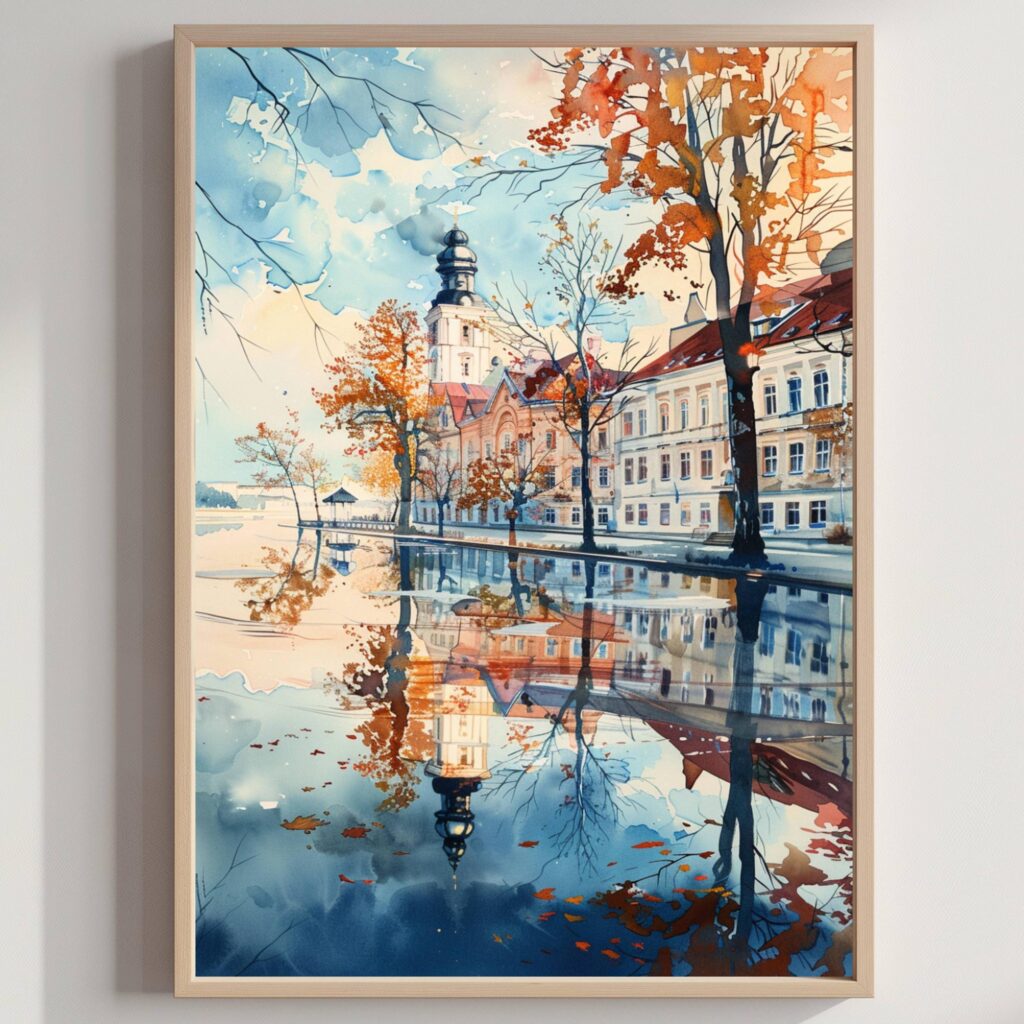
Riga holds one of the largest and best-preserved collections of Art Nouveau architecture anywhere in the world, an estimated third of the buildings in its central districts were constructed in the style during a remarkable building boom between roughly 1904 and 1914, when Riga was one of the fastest-growing industrial and trading cities in the Russian Empire. Much of that architecture survives today, its elaborately ornamented facades, sculpted faces, and flowing organic detail earning the Art Nouveau district UNESCO recognition as part of Riga’s historic centre.
That architectural flourishing came to an abrupt halt with the outbreak of the First World War, followed by decades of Soviet occupation during which much of the ornamentation, considered bourgeois excess by Soviet authorities, was left to decay rather than actively maintained, inadvertently preserving original detail that might otherwise have been modernised away.
A City Rebuilding Its Own Memory
Latvia regained independence in 1991, and Riga has spent the decades since undertaking extensive restoration of its Art Nouveau heritage, alongside a broader national project of recovering and re-examining history suppressed or rewritten during Soviet rule. The city’s Freedom Monument, built in the 1930s during Latvia’s brief interwar independence, survived Soviet occupation despite officially representing Latvian nationalism, an unusual survival Soviet authorities allowed rather than risk provoking unrest by removing it.
Riga’s Central Market, housed partly in enormous converted Zeppelin hangars from the 1930s, remains one of the largest markets in Europe, a striking piece of adapted industrial architecture still serving its original commercial purpose nearly a century later.
Painting Ornament and Faded Grandeur
Riga’s elaborately decorated Art Nouveau facades give a watercolourist extraordinary sculptural detail to work with. We’ve captured that ornamentation in our own Riga Watercolor Print, painted first by hand and printed to order on archival paper, a small piece of Latvia for a wall at home.
Built during a boom that ended in war and preserved, oddly, by decades of neglect, Riga remains one of the more unexpected architectural treasure troves in Northern Europe.