
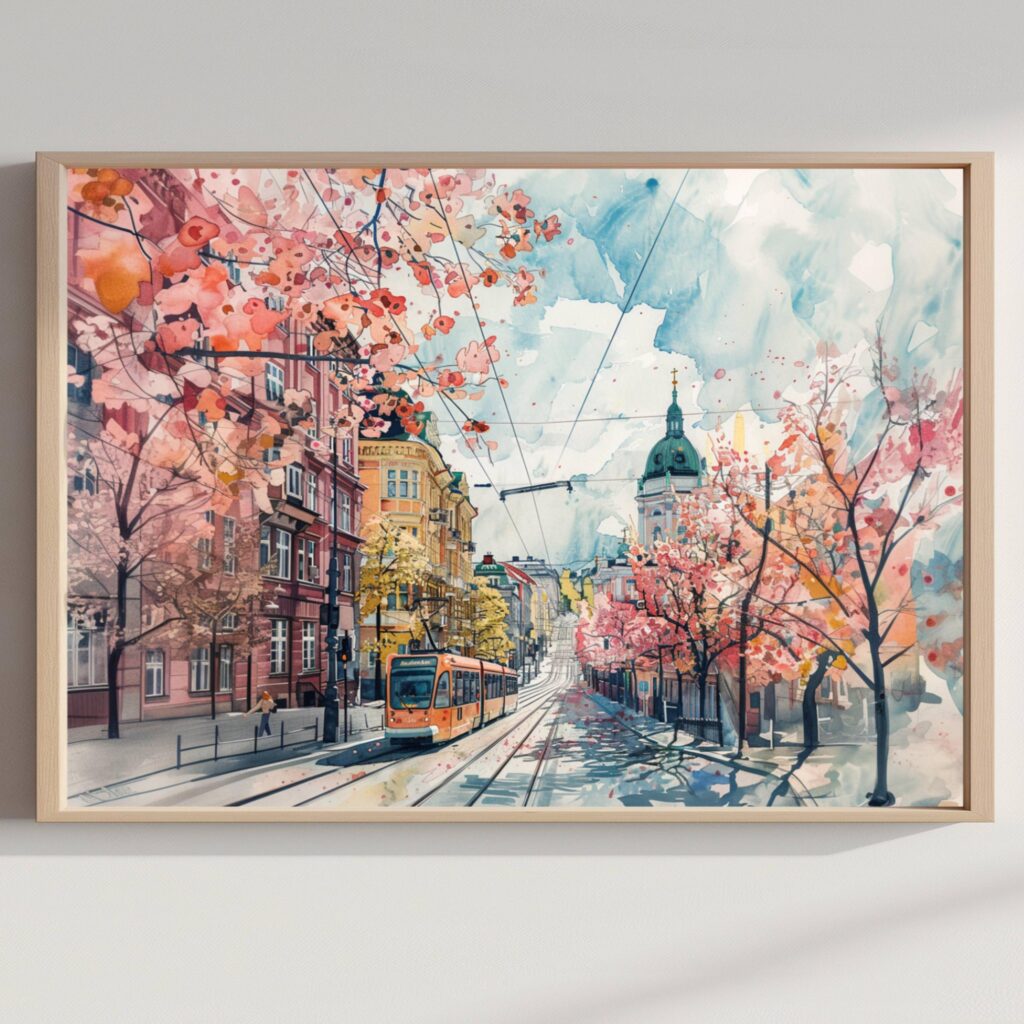
Much of central Helsinki’s grand neoclassical architecture, including its striking white cathedral overlooking Senate Square, was built during the 19th century while Finland was a Grand Duchy under the Russian Empire, designed deliberately to resemble Saint Petersburg and project imperial order onto what had previously been a relatively modest Baltic port town. Helsinki Cathedral itself was originally dedicated to Tsar Nicholas I, a fact largely forgotten by most visitors admiring its bright white facade against Helsinki’s characteristically pale northern sky.
Finland gained full independence from Russia in 1917, and rather than dismantling the imperial-era architecture, the country largely kept and reinterpreted it, the buildings shifted meaning from symbols of imperial control to simply being part of the capital’s own architectural identity.
A City Defined by Design and Sauna Culture
Helsinki has built an international reputation around design excellence, home to brands like Marimekko and Iittala, and was named World Design Capital in 2012, a recognition of design’s genuinely central role in Finnish civic and everyday life rather than a purely commercial branding exercise. Sauna culture, meanwhile, remains deeply woven into Finnish identity, UNESCO recognised it as Intangible Cultural Heritage in 2020, and Helsinki alone is estimated to have more public and private saunas than the entire city has residents in some counts, a genuine daily ritual rather than a tourist novelty.
Suomenlinna, a sea fortress built across several islands just off Helsinki’s coast, dates to the 18th century and remains one of the best-preserved military fortifications of its kind in the world, now a UNESCO World Heritage Site and popular short ferry trip from the city centre.
Painting White Stone Under Northern Sky
Helsinki’s clean white neoclassical architecture against pale Nordic light gives a watercolourist a distinctive, restrained palette to work with. We’ve captured that light in our own Helsinki Watercolor Print, painted first by hand and printed to order on archival paper, a small piece of Finland for a wall at home.
Built to resemble an empire’s grandest city and now defined by saunas and quiet design, Helsinki remains a capital that outgrew the ambitions it was originally built to reflect.