
New Delhi was purpose-built by British colonial administrators beginning in 1911, designed by architects Edwin Lutyens and Herbert Baker as an entirely new imperial capital adjacent to the much older city of Delhi, a deliberate architectural statement of British authority intended to project permanence, an intention that lasted barely 36 years before Indian independence in 1947. Its wide, tree-lined boulevards radiating from Rashtrapati Bhavan, originally built as the Viceroy’s residence and now the official home of India’s President, remain some of the most recognisable colonial-era urban planning anywhere in South Asia.
That planned, imperial city sits directly beside Old Delhi, a much older urban core dating back to the Mughal Empire, its narrow lanes and Red Fort, built by Emperor Shah Jahan, the same emperor responsible for the Taj Mahal, offering a genuinely different, centuries-older version of the capital just kilometres away.
A City Repurposed Almost Overnight
Buildings designed specifically to house British colonial administration were repurposed almost immediately after independence to serve India’s own new democratic government, a rare case of imperial architecture being inherited wholesale rather than dismantled, the same grand boulevards now hosting India’s Republic Day parade each January instead of colonial military processions. India Gate, originally built as a war memorial honouring Indian soldiers who died fighting for the British Empire, has since taken on a broader, reclaimed significance as a national memorial in its own right.
Delhi as a whole, encompassing both the old and new cities, is now one of the most populous urban areas in the world, its layered history spanning Mughal, colonial, and modern independent India within a single, continuously inhabited metropolitan region.
Painting Imperial Stone and Indian Sky
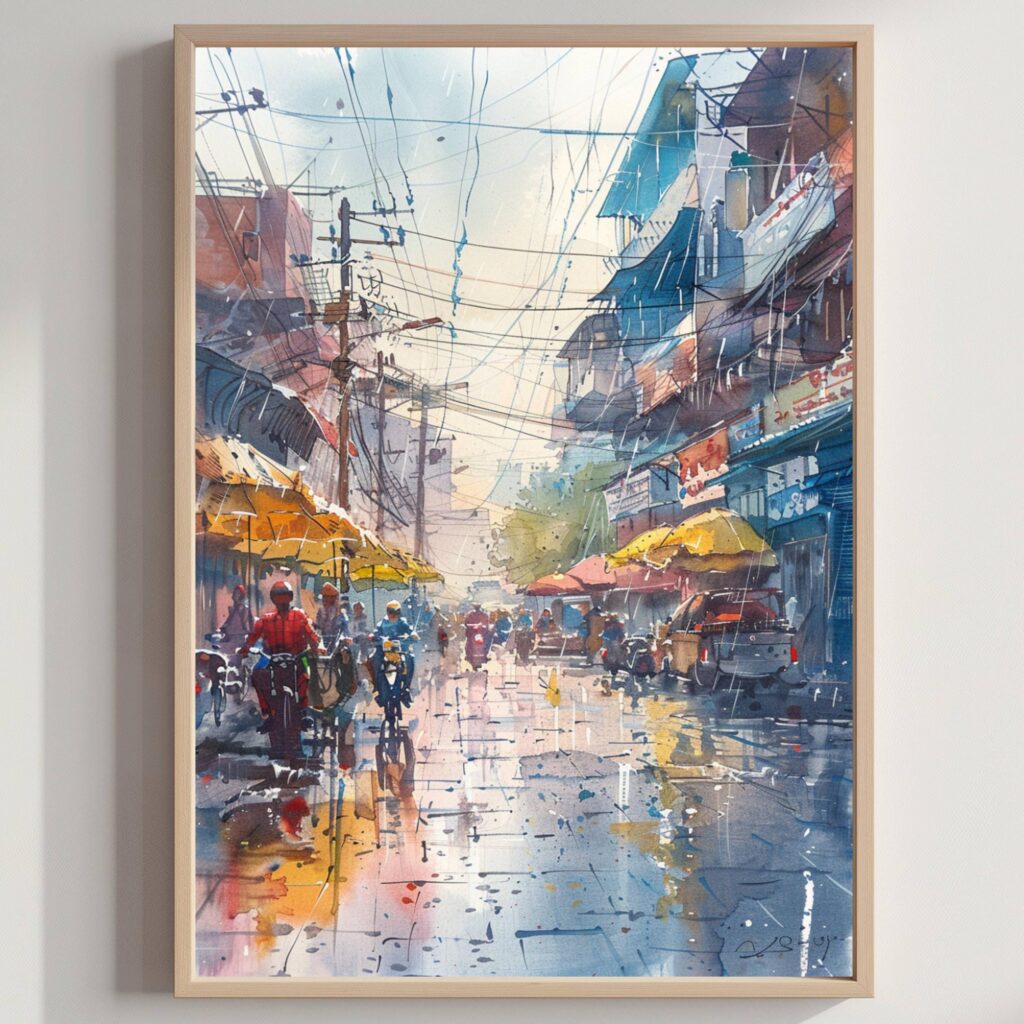
The grand sandstone architecture of New Delhi against warm Indian light gives a watercolourist rich, monumental colour to work with. We’ve captured that grandeur in our own New Delhi Watercolor Print, painted first by hand and printed to order on archival paper, a small piece of India for a wall at home.
Built to project 400 years of British rule and inherited within 36, New Delhi remains one of history’s clearer reminders that the buildings often outlast the intentions behind them.