
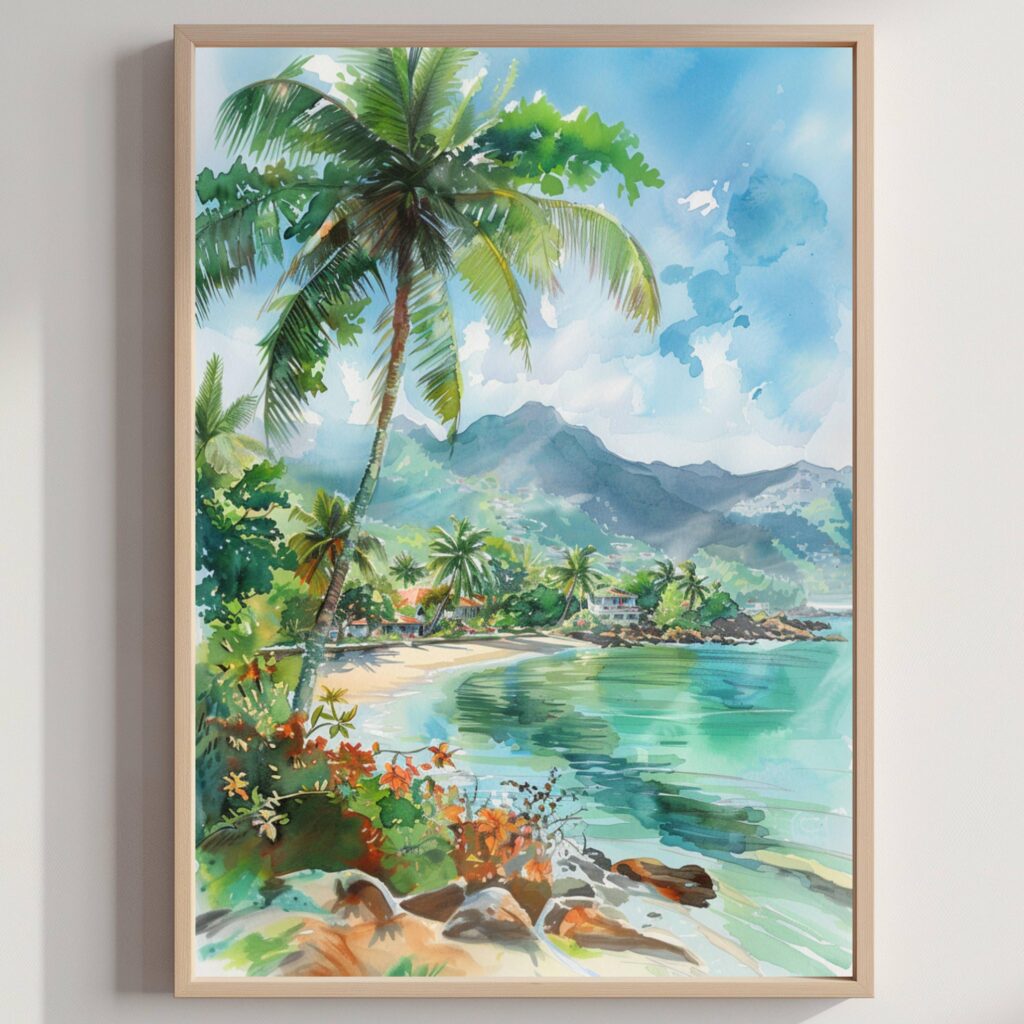
The Seychelles is one of the only island nations on Earth made of granite rather than coral or volcanic rock, a geological quirk that traces back roughly 65 million years to the breakup of the ancient supercontinent Gondwana, when a sliver of continental crust broke away and drifted into the Indian Ocean rather than sinking beneath it. That granite foundation is what gives islands like La Digue their famous boulder-strewn beaches, massive smooth granite formations unlike anything found on typical tropical islands.
Praslin Island is home to the Vallee de Mai, a UNESCO World Heritage forest often described as a “living fossil,” home to the coco de mer palm, which produces the largest and heaviest seed of any plant on Earth, sometimes weighing over 20 kilograms, and found growing naturally almost nowhere else on the planet.
An Archipelago Built Around Conservation
With a population of under 100,000 spread across just 115 islands, the Seychelles has positioned itself deliberately as a high-value, low-impact tourism destination, limiting development and prioritising conservation over mass tourism, roughly half the nation’s total land area is protected. That approach has helped preserve rare species found nowhere else, including the Aldabra giant tortoise, among the longest-lived animals on Earth, some individuals documented living well over 150 years.
The Seychelles declared independence from Britain in 1976, and remains one of the smallest nations in Africa by population, despite its outsized reputation in global luxury travel.
Painting Granite and Turquoise Water
The pink-grey granite boulders against impossibly clear turquoise water give a watercolourist a genuinely unusual coastal palette to work with. We’ve captured that distinctive coastline in our own Seychelles Watercolor Print, painted first by hand and printed to order on archival paper, a small piece of the Indian Ocean for a wall at home.
Broken off a supercontinent and drifted into the Indian Ocean, the Seychelles remains one of the few tropical destinations whose beaches are, geologically speaking, made of mountain rather than reef.