
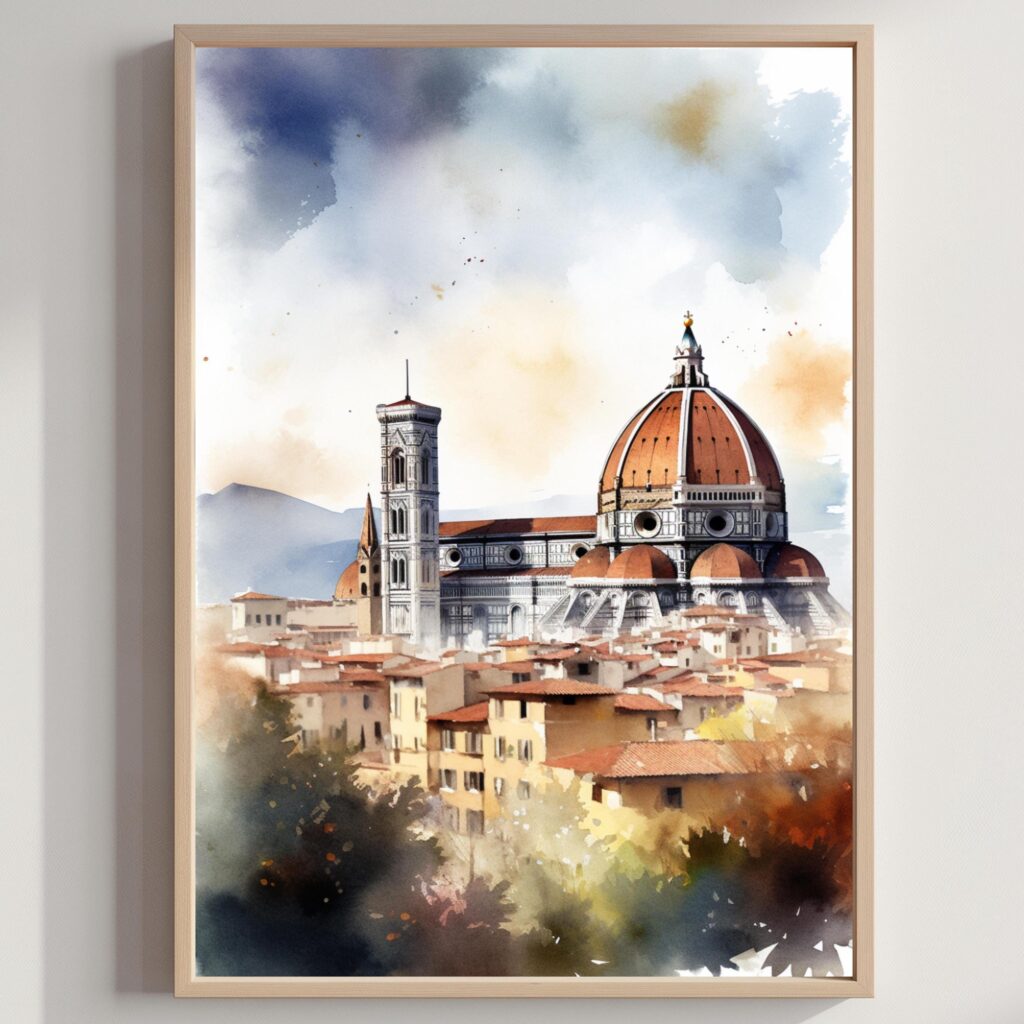
Florence’s transformation into the birthplace of the Renaissance was substantially bankrolled by one family: the Medici, who rose from wool merchants and bankers to become the city’s de facto rulers and, crucially, its most prolific patrons of art and architecture for over three centuries. Their wealth funded Brunelleschi’s dome atop the Florence Cathedral, completed in 1436 using an engineering method so innovative that its exact construction technique still isn’t fully understood, no scaffolding survives to show precisely how it was built without one collapsing under its own weight.
That dome remains the largest brick dome ever constructed, and Brunelleschi reportedly kept his engineering methods deliberately secretive during construction, worried rivals would steal the technique before he’d finished proving it could work at all.
A City Where Artists Competed Openly
Florence’s concentration of artistic talent during the 15th and 16th centuries was extraordinary even by Renaissance standards, Michelangelo, Leonardo da Vinci, and Botticelli all worked in the city, often in direct competition for the same patrons and commissions. Michelangelo’s David, carved from a single block of marble previously abandoned by two other sculptors as unworkable, was completed in 1504 and originally placed outdoors in the Piazza della Signoria before being moved indoors to the Accademia Gallery for preservation.
The Uffizi Gallery, originally built as government offices, “uffizi” literally means offices, now houses one of the world’s most important collections of Renaissance art, its transformation from bureaucratic building to museum itself a quiet testament to how thoroughly art came to define the city’s identity.
Painting Terracotta Against Tuscan Hills
Florence’s warm terracotta rooftops against the Tuscan hills give a watercolourist a rich, sun-washed palette to work with. We’ve captured that glow in our own Florence Watercolor Print, painted first by hand and printed to order on archival paper, a small piece of Tuscany for a wall at home.
Funded by bankers who wanted to be remembered for more than money, Florence remains proof that patronage, applied generously enough, can outlast the fortune that paid for it.