
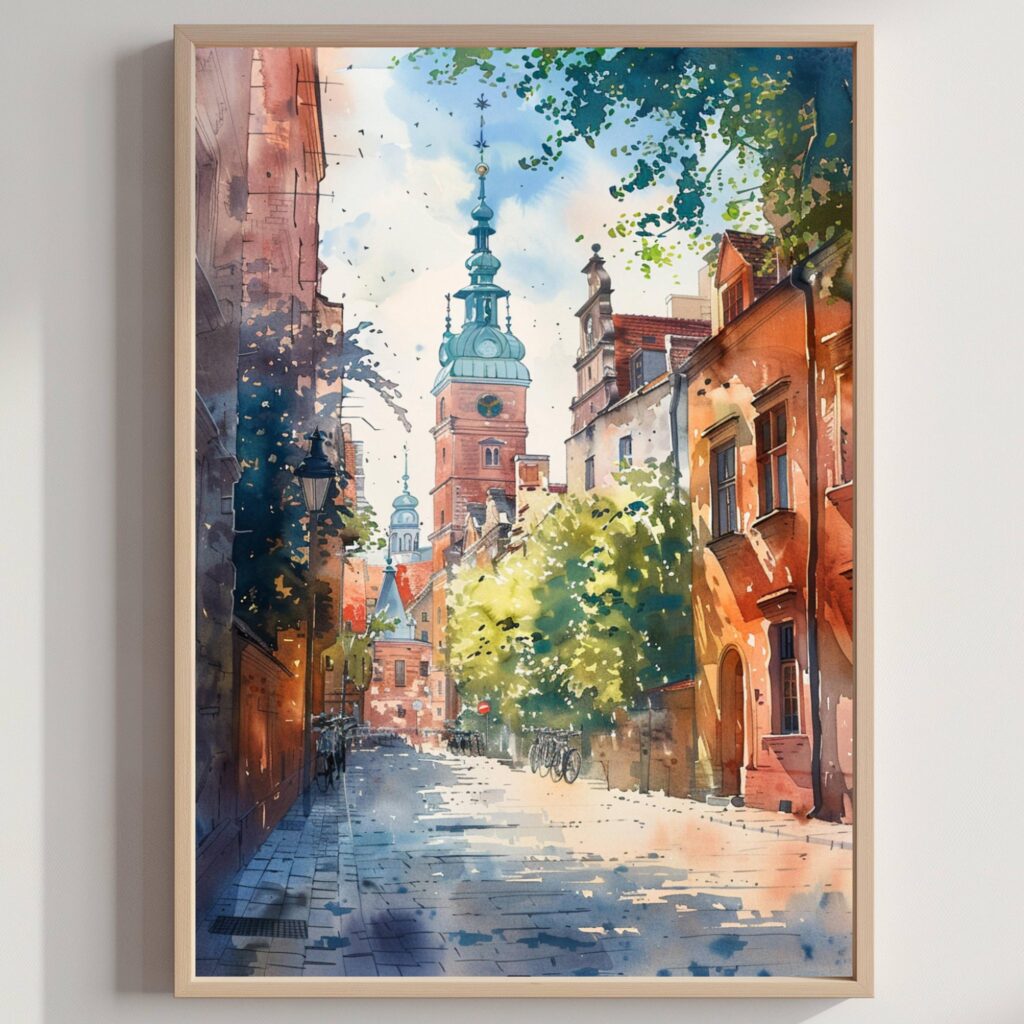
By the end of the Second World War, an estimated 85% of Warsaw had been deliberately destroyed, much of it in a systematic demolition ordered by German forces following the 1944 Warsaw Uprising, a punitive levelling intended to erase the city entirely. What followed was one of the most ambitious reconstruction projects in modern history: rather than rebuild in a modern style, Polish architects and citizens chose to painstakingly reconstruct the historic Old Town exactly as it had looked before the war, using pre-war paintings, photographs, and even architecture students’ measured drawings as reference.
That reconstruction was so historically meticulous that UNESCO inscribed Warsaw’s rebuilt Old Town as a World Heritage Site in 1980, an unusual honour for a district that is, in the strictest sense, less than a century old, recognition of the reconstruction itself as an act of cultural significance.
A City That Chose Memory Over Modernism
The decision to rebuild rather than modernise wasn’t universally embraced at the time, some urban planners argued for a fresh start, but the choice ultimately reflected a broader determination not to let the occupation have the final word over the city’s identity. The Warsaw Uprising Museum, opened in 2004, documents that resistance in detail, a reminder that the city’s rebuilding was as much a political statement as an architectural one.
Frederic Chopin, born just outside Warsaw, remains deeply woven into the city’s identity, public benches throughout the centre play snippets of his music at the push of a button, and a dedicated museum houses the largest collection of his manuscripts and personal items anywhere in the world.
Painting a City Rebuilt From Memory
The pastel facades of Warsaw’s reconstructed Old Town square give a watercolourist warm, layered colour to work with, each building a deliberate act of remembering. We’ve captured that rebuilt warmth in our own Warsaw Watercolor Print, painted first by hand and printed to order on archival paper, a small piece of Poland for a wall at home.
Levelled almost entirely and rebuilt from photographs and memory, Warsaw remains proof that a city’s history can survive even when its buildings, briefly, did not.