
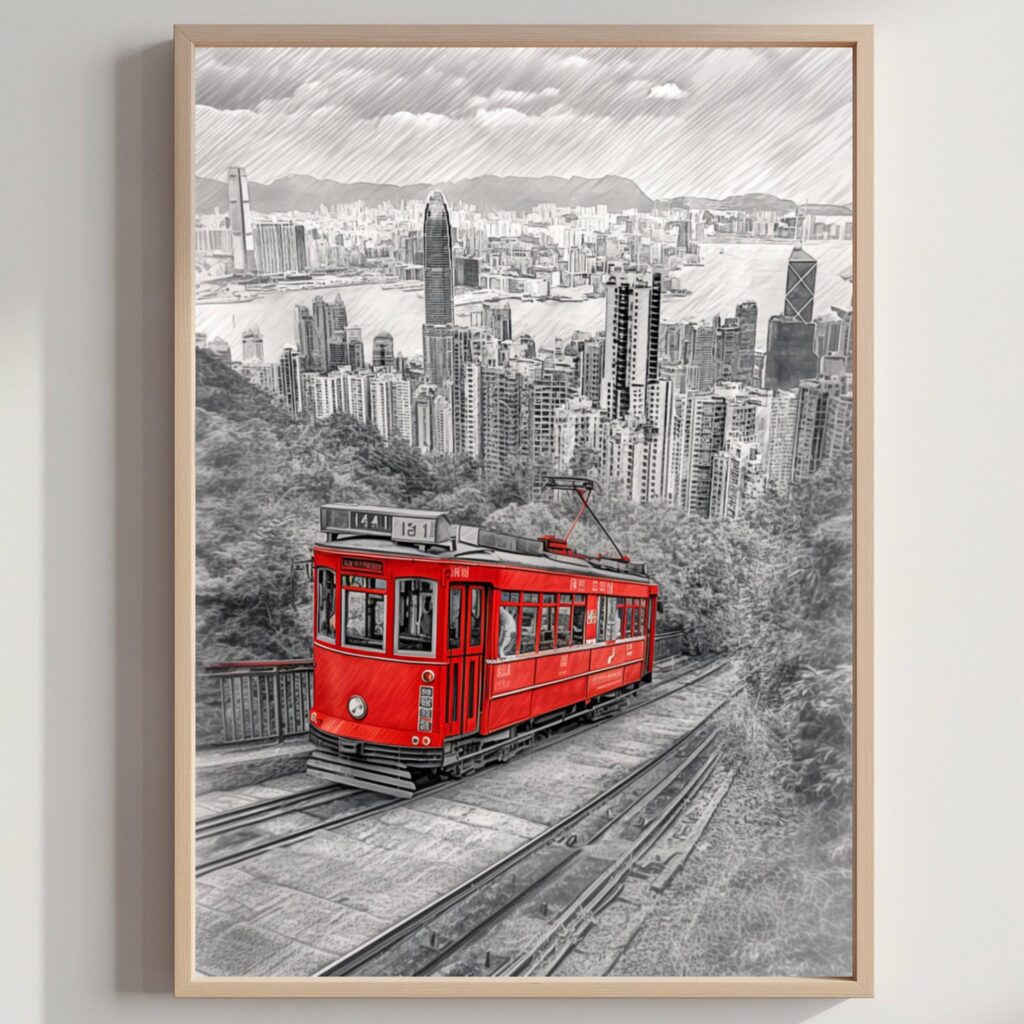
Victoria Peak, known locally simply as “the Peak,” rises 552 metres above Hong Kong Island, and for much of the colonial era, it was reserved almost exclusively for the wealthiest residents, a 19th-century law effectively barred most local Chinese residents from living there at all, a segregation policy that wasn’t fully repealed until 1930. Today it’s the most visited tourist attraction in Hong Kong, drawing millions annually for a view once available only to the privileged few.
The Peak Tram, which has carried passengers up the mountain’s steep slope since 1888, was originally built specifically to serve those wealthy residents and the Peak’s grand colonial-era homes, and remains one of the oldest funicular railways in Asia, its cars climbing gradients steep enough that buildings outside the window appear to lean at odd angles during the ride.
A Skyline Built on Reclaimed Land
The harbour view Victoria Peak is famous for looks out over a Hong Kong skyline that has been substantially reshaped by land reclamation, significant portions of Kowloon and Hong Kong Island’s waterfront sit on land that didn’t exist a century ago, pushed outward into Victoria Harbour to accommodate the city’s relentless growth. That density is part of what makes the view so striking, one of the highest concentrations of skyscrapers anywhere on Earth, packed into a harbour setting few other financial capitals can match.
On clear evenings, the Peak offers views of Hong Kong’s nightly Symphony of Lights show, a coordinated light and laser display across dozens of buildings on both sides of the harbour, running since 2004.
Painting a Harbour From Above
The layered towers and harbour light visible from the Peak give a watercolourist an extraordinary sense of scale and depth to work with. We’ve captured that elevated view in our own Victoria Peak Hong Kong Print, printed to order on archival paper, a small piece of Hong Kong for a wall at home.
Once reserved for the privileged few, the view from Victoria Peak now belongs, each year, to millions of visitors who simply queue for the tram.