
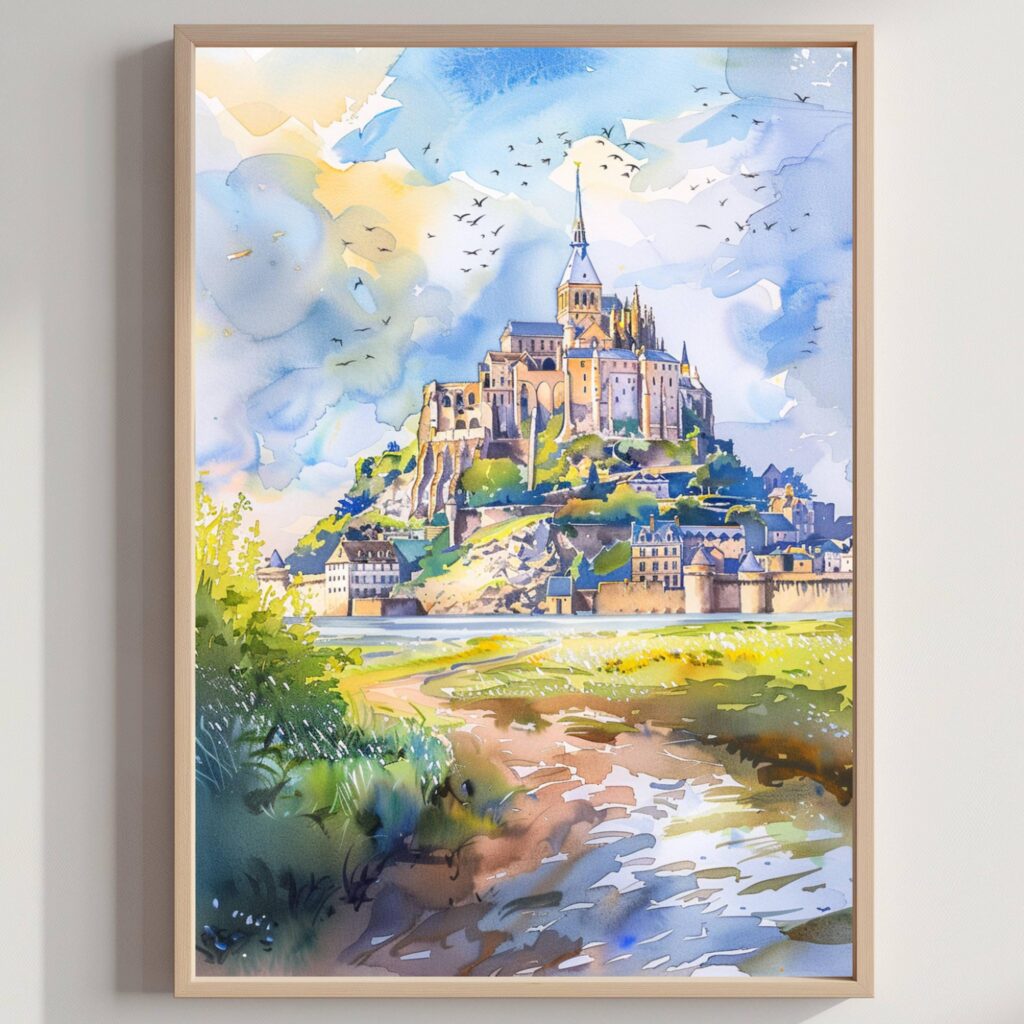
Mont Saint-Michel sits on a rocky tidal island off the Normandy coast, and for much of its history, access depended entirely on the tide, visitors and pilgrims had to time their crossing carefully across the surrounding mudflats, or risk being caught by tides that locals describe as rising “as fast as a galloping horse.” The abbey at its summit was founded in 708 CE, according to legend, after the Archangel Michael appeared to the Bishop of Avranches in a dream, insisting a shrine be built on the rock.
What began as a modest chapel grew, over centuries, into the soaring Gothic abbey that crowns the island today, construction continuing in phases through the medieval period as the site became one of the most important pilgrimage destinations in Christian Europe, its difficulty of access only adding to its spiritual mystique.
A Fortress That Never Fell
During the Hundred Years’ War, Mont Saint-Michel withstood repeated English sieges and was the only site in western and northern France never captured, its natural tidal defences and fortified walls proving more effective than nearly any other stronghold in the region. During the French Revolution, the abbey was repurposed as a prison, holding political prisoners for decades before public campaigning, including from Victor Hugo, helped restore it as a historic monument in the 19th century.
A causeway built in the 19th century made access easier but disrupted the natural tidal flow around the island; a major engineering project completed in 2015 replaced it with a bridge specifically to restore the island’s original tidal character.
Painting an Island That Isn’t Always One
The abbey’s silhouette rising from flat tidal sands, sometimes surrounded by water and sometimes not, gives a watercolourist a genuinely unusual subject to capture. We’ve painted that shifting scene in our own Mont Saint-Michel Watercolor Print, printed to order on archival paper, a small piece of Normandy for a wall at home.
Never once captured in war and never quite fixed to the mainland, Mont Saint-Michel remains a monument that has spent 1,300 years being defined by what surrounds it.