
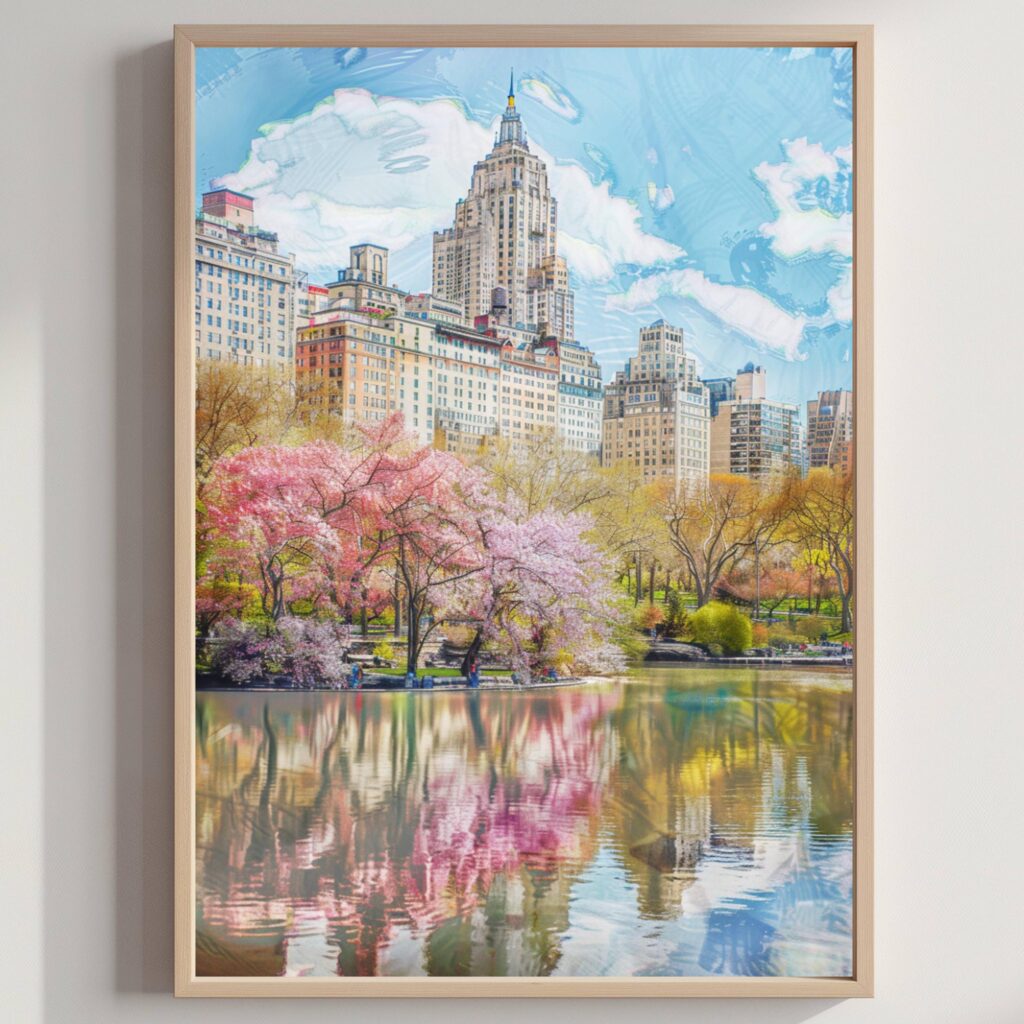
Central Park looks like nature that Manhattan simply grew around, but almost nothing about it is original terrain. Designed by Frederick Law Olmsted and Calvert Vaux and completed in stages through the 1860s and 70s, the park required moving roughly 10 million cartloads of soil and rock, more gunpowder was used blasting its bedrock into shape than was fired at the Battle of Gettysburg a few years later. What looks untouched is, in fact, one of the most deliberately engineered landscapes in America.
Before construction, the site was home to Seneca Village, a thriving community of primarily African American landowners, along with Irish and German immigrants, displaced entirely when the city seized the land through eminent domain, a history largely erased from public memory until archaeological work in the 1990s began recovering it.
An Escape Built Into the Grid
Olmsted and Vaux designed the park specifically as a democratic space, intended, in their own words, to give working-class New Yorkers the same restorative access to nature that wealthier residents could otherwise only find by leaving the city entirely. Its winding paths and sunken transverse roads, which allow cross-town traffic to pass beneath park level, were deliberate design choices meant to preserve an uninterrupted sense of pastoral escape despite sitting in the middle of one of the world’s densest cities.
Today the park draws an estimated 42 million visits a year, more than most entire national parks, a single green rectangle absorbing more foot traffic than most protected wilderness in the country.
Painting Green in the Middle of Grey
The contrast between Central Park’s rolling lawns and the surrounding skyline gives a watercolourist a genuinely striking sense of scale to work with. We’ve captured that contrast in our own Central Park Watercolor Print, painted first by hand and printed to order on archival paper, a small piece of New York for a wall at home.
Built from blasted rock and displaced communities into something that now feels entirely inevitable, Central Park remains proof that even a wilderness can be a work of design.