
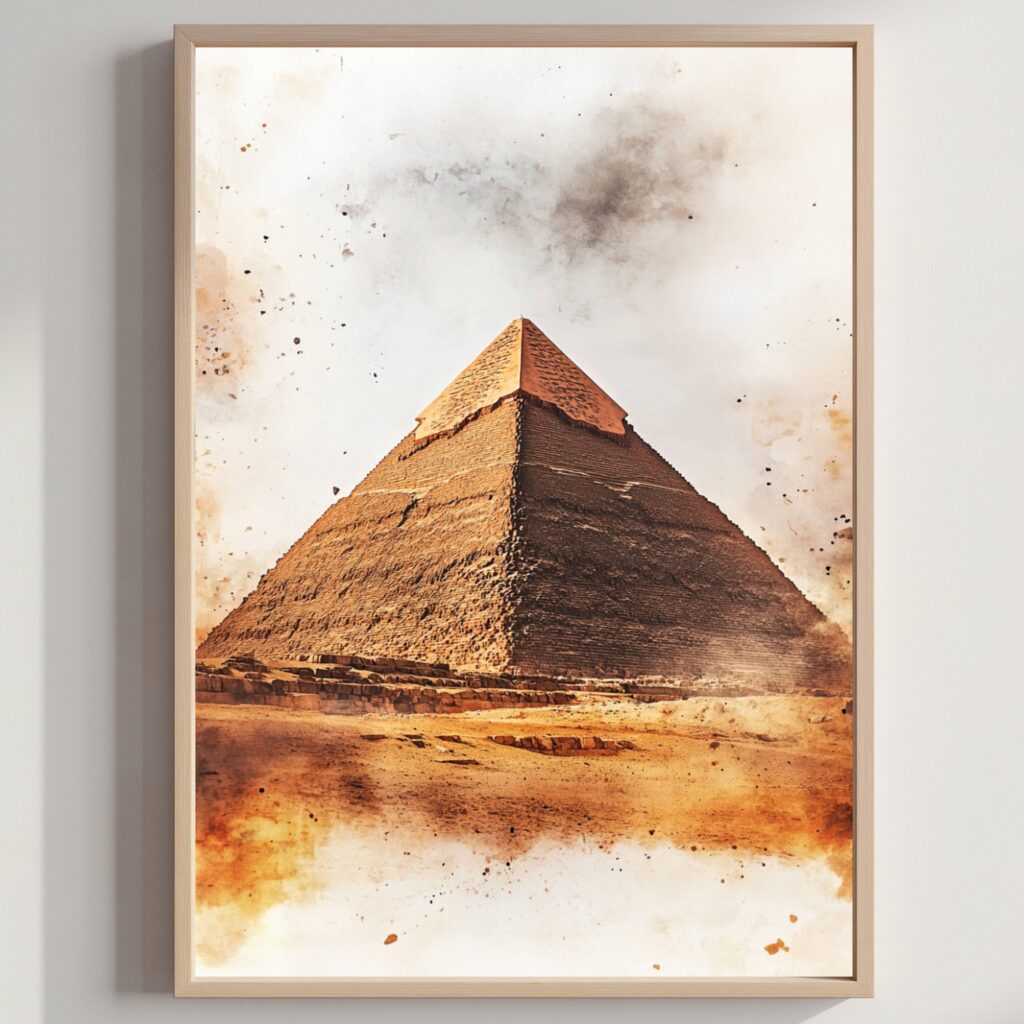
The Great Pyramid of Giza is the sole survivor of the Seven Wonders of the Ancient World, and remarkably, it held the record for tallest human-made structure on Earth for roughly 3,800 years, a record unbroken until England’s Lincoln Cathedral was completed around 1311 CE. Built as a tomb for the Pharaoh Khufu around 2560 BCE, it originally stood even taller than its current 138 metres, its outer casing of polished white limestone long since stripped away, mostly for later building projects in Cairo.
Estimates suggest the pyramid contains around 2.3 million limestone and granite blocks, some weighing as much as 80 tonnes, moved and stacked with a precision that still generates active debate among Egyptologists and engineers about the exact methods used, ramps, levers, and enormous coordinated labour are broadly agreed upon, though the finer details remain unresolved.
Not Built by Slaves, According to the Evidence
Popular imagination has long pictured the pyramid’s builders as enslaved labourers, but archaeological evidence, including nearby worker cemeteries and housing complexes discovered in the 1990s, points instead to a large, organised workforce of paid labourers, including skilled craftsmen, fed and housed by the state, more akin to a national infrastructure project than mass forced labour.
The pyramid’s sides are aligned to true north with an accuracy of within a fraction of a degree, a level of astronomical and engineering precision achieved without any of the tools modern surveyors would consider basic equipment.
Painting Stone Against Desert Sky
The pyramid’s stark geometric mass against the flat gold of the Giza plateau gives a watercolourist bold shape and dramatic light to work with. We’ve captured that ancient scale in our own Giza Pyramid Watercolor Print, painted first by hand and printed to order on archival paper, a small piece of Egypt for a wall at home.
The only ancient wonder still standing, the Great Pyramid has had over 4,500 years to make its case for permanence, and has yet to lose the argument.