
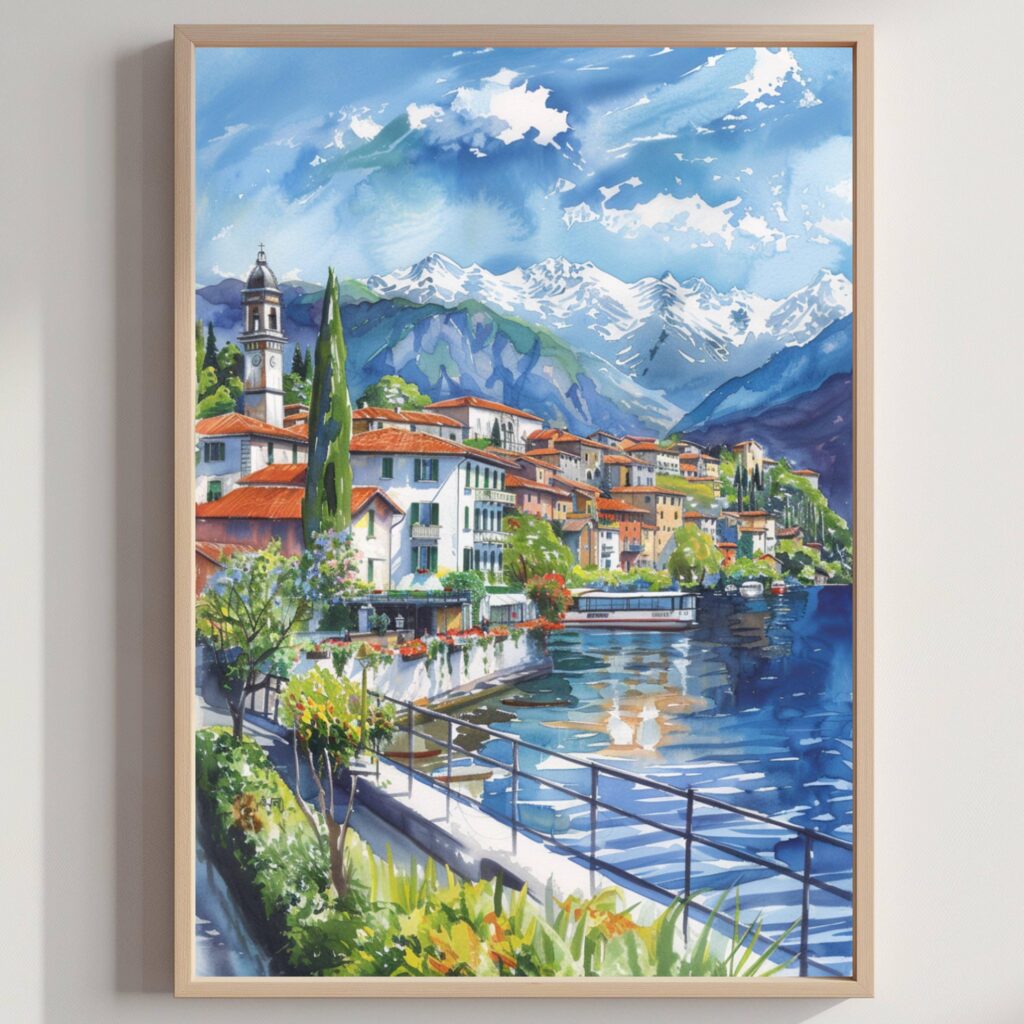
Lake Como was formed by glaciers during the last Ice Age, carved into its distinctive inverted-Y shape by ice sheets retreating roughly 12,000 years ago, leaving behind one of the deepest lakes in Europe, plunging over 400 metres in places. Its setting, steep wooded mountains rising directly from the water, has drawn admirers since Roman times, Pliny the Younger, the Roman writer, owned two villas on its shores nearly 2,000 years ago.
The lake’s grand villas, many still privately owned, define its shoreline today: Villa del Balbianello, with its terraced gardens dropping to the water, has appeared in numerous films, while Villa Carlotta houses an extensive collection of Neoclassical sculpture within its own botanical gardens, azaleas and rhododendrons blooming each spring along the water’s edge.
A Lake That Became Shorthand for Glamour
Lake Como’s reputation as a retreat for European aristocracy dates back centuries, but it took on a distinctly modern kind of fame in the 21st century as a favoured destination for celebrities and film productions, its name now functioning almost as shorthand for a particular kind of understated wealth. Despite that reputation, the lake’s smaller towns, Varenna and Bellagio among them, retain a quieter, more traditionally Italian character, fishing boats still working the same waters as the private yachts nearby.
Ferries have connected the lake’s towns since the 19th century, remaining, alongside private boats, one of the only practical ways to move between settlements separated by steep mountain terrain rather than easy roads.
Painting Water Framed by Mountains
The interplay of still water, pastel villas, and steep green mountains gives a watercolourist a naturally layered composition to work with. We’ve captured that alpine calm in our own Lake Como Watercolor Print, painted first by hand and printed to order on archival paper, a small piece of northern Italy for a wall at home.
Carved by ice and settled by Romans long before anyone thought to call it glamorous, Lake Como has simply had two thousand years to get used to being admired.