
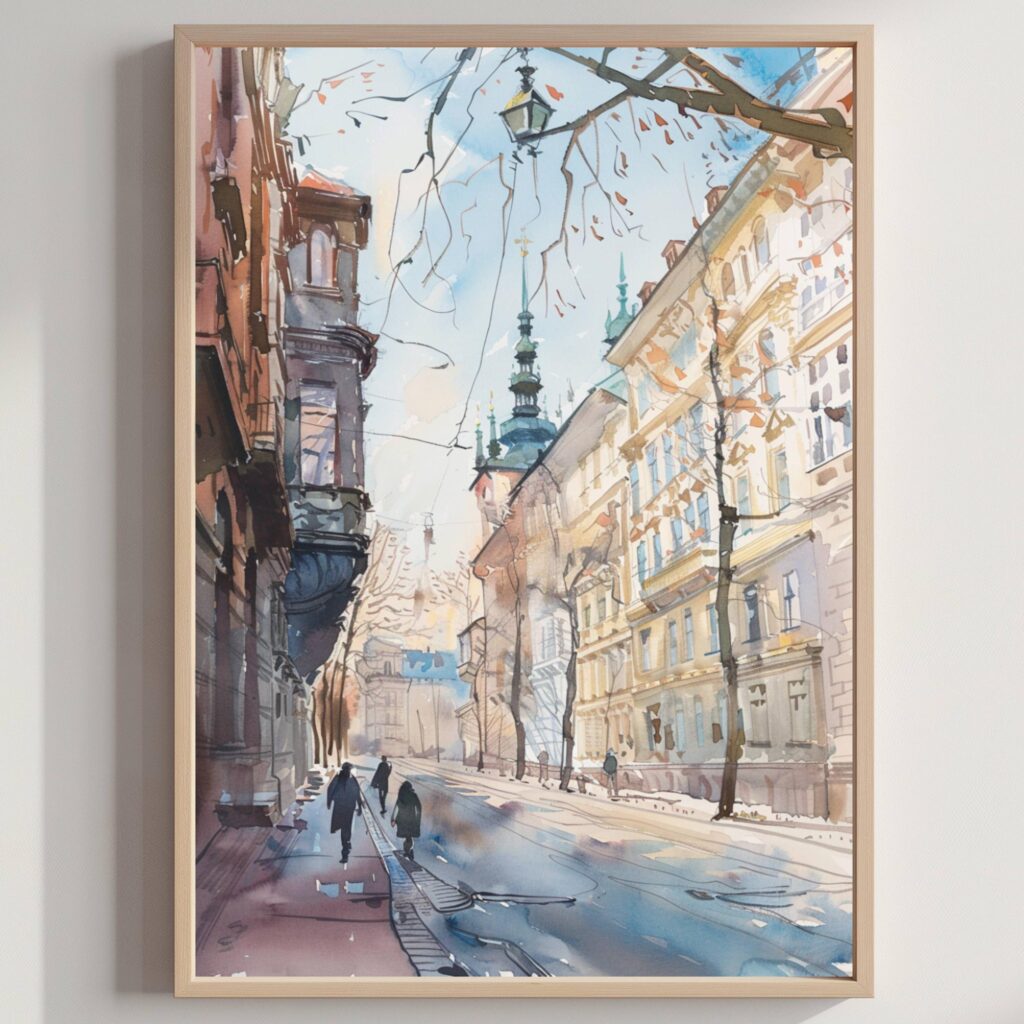
Prague’s historic centre owes its remarkable preservation partly to luck and partly to a hard, deliberate choice. Unlike many European capitals, it suffered relatively little destruction during the Second World War, and its medieval, Gothic, and Baroque architecture, layered across roughly a thousand years of continuous building, survives largely intact, dense enough that UNESCO designated the entire historic centre a World Heritage Site rather than a handful of individual monuments.
Prague Castle, overlooking the city from a ridge above the Vltava River, is recognised by Guinness World Records as the largest ancient castle complex in the world, its grounds encompassing not just a single fortress but palaces, churches, and gardens accumulated across more than a millennium of continuous royal and, later, presidential use.
A Bridge Built With Egg Yolks, Allegedly
Charles Bridge, connecting the Old Town to the castle district across the Vltava, was completed in the 14th century under King Charles IV, and local legend holds that eggs were mixed into the mortar to strengthen it, a claim that has never been definitively proven but that chemical analysis has, curiously, never entirely ruled out either. The bridge is lined with 30 Baroque statues, added mostly in the 18th century, and remains one of the most walked, and most photographed, spans in Europe.
Prague’s Astronomical Clock, mounted on the Old Town Hall since 1410, is the oldest working astronomical clock in the world, still performing its hourly mechanical show of moving apostle figures to gathered crowds exactly as it has for over six centuries.
Painting a City That Never Stopped Building
Prague’s mix of red rooftops, spires, and river light gives a watercolourist centuries of overlapping architectural styles to work with in a single composition. We’ve captured that layered skyline in our own Prague Watercolor Print, painted first by hand and printed to order on archival paper, a small piece of Central Europe for a wall at home.
Spared the worst of a violent century largely by circumstance, Prague has spent that borrowed time quietly becoming one of the most intact medieval cities left in Europe.