
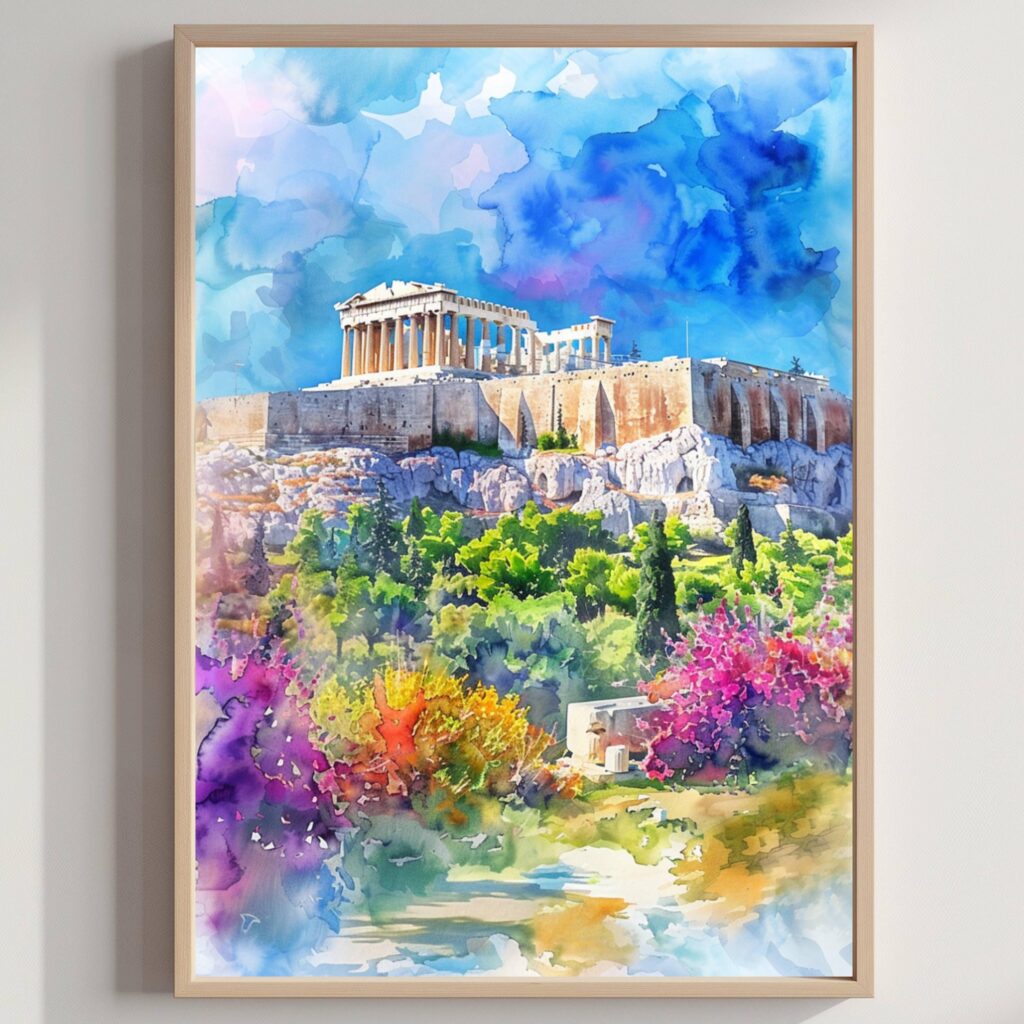
The Parthenon, the Acropolis’s most famous structure, was built in just under a decade, between 447 and 438 BCE, under the direction of statesman Pericles during Athens’s golden age. It was constructed as a temple to Athena, the city’s patron goddess, and originally housed a colossal gold-and-ivory statue of her, long since lost, that once stood over 12 metres tall inside the temple’s main chamber.
Remarkably, the Parthenon has survived roughly 2,500 years despite serving, at various points in its history, as a Christian church, an Islamic mosque, and, disastrously, a Venetian-besieged Ottoman gunpowder store, an explosion in 1687 tore through its centre and blew off much of its roof, the damage still visible in the ruins today.
The Marbles That Never Came Home
Much of the Acropolis’s original sculpture, the so-called Elgin Marbles, was removed by the British diplomat Lord Elgin in the early 1800s and now sits in the British Museum in London, a source of ongoing diplomatic dispute between Greece and the UK. Greece has spent decades campaigning for their return, and built the Acropolis Museum, opened in 2009, specifically with a gallery designed to eventually reunite them, empty spaces deliberately left waiting.
Modern restoration work on the Acropolis, ongoing since the 1970s, uses titanium rather than the corroding iron clamps 19th-century restorers mistakenly installed, a slow, meticulous effort to undo previous well-intentioned damage as much as ancient wear.
Painting Marble Against Athens’ Light
The honey-coloured marble of the Acropolis, set high above Athens against a sharp Mediterranean sky, gives a watercolourist extraordinary contrast and texture to work with. We’ve captured that ancient light in our own Acropolis Athens Watercolor Print, painted first by hand and printed to order on archival paper, a small piece of Greece for a wall at home.
Surviving war, empire, and its own well-meaning restorers, the Acropolis remains standing largely on the strength of the ambition that first raised it.