
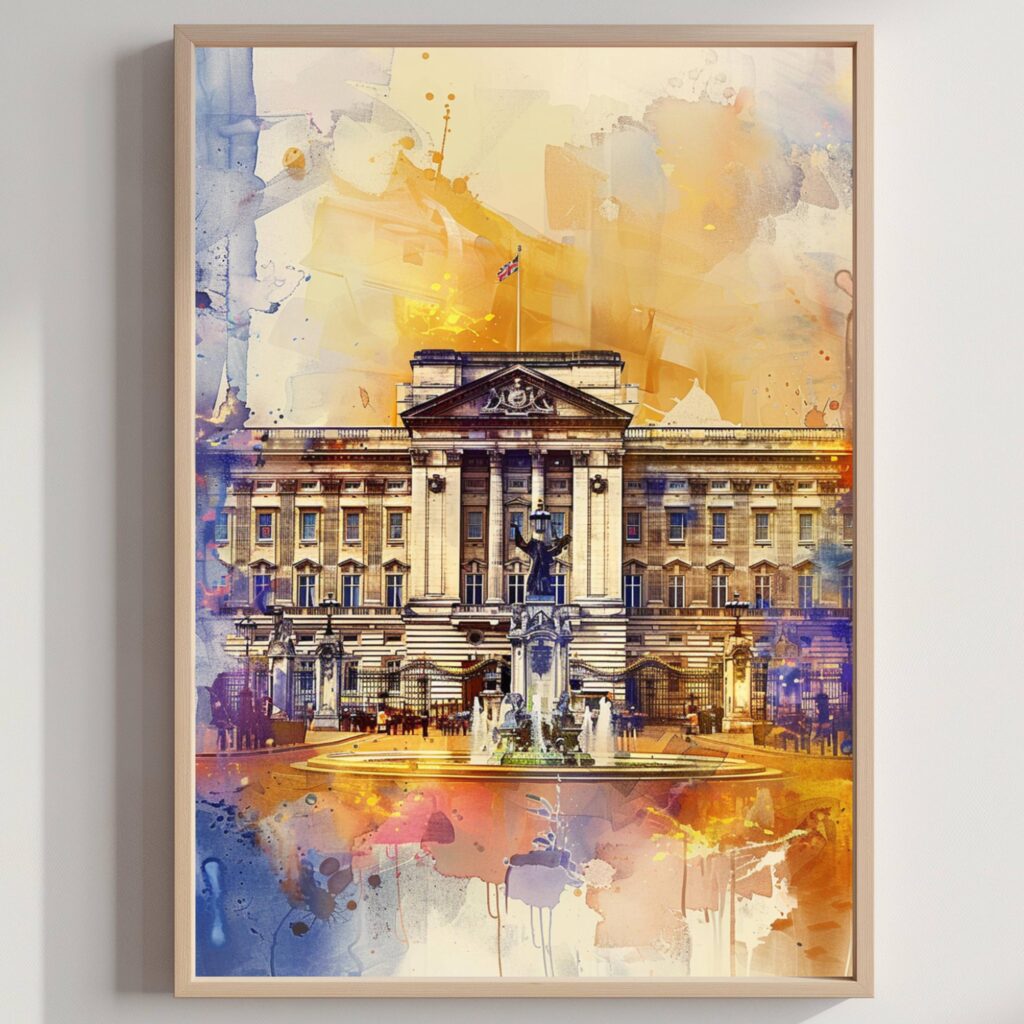
Buckingham Palace wasn’t originally built as a royal residence at all. It began life in 1703 as Buckingham House, a private townhouse for the Duke of Buckingham, and was only bought by King George III in 1761 as a family retreat for Queen Charlotte, close to St James’s Palace but more private. It didn’t become the official royal residence until Queen Victoria moved in upon her accession in 1837, the first monarch to actually live there full-time.
The palace has 775 rooms, including 52 royal and guest bedrooms, 188 staff bedrooms, and 78 bathrooms, along with its own post office, cinema, swimming pool, and doctor’s surgery, a small self-contained town rather than a single house. Its famous balcony, where the Royal Family gathers for public occasions, wasn’t part of the original design either; it was added during a 19th-century remodel that also gave the palace its current East Front facade.
A Very Public Private Residence
Buckingham Palace’s State Rooms, used for official entertaining, open to the public each summer while the monarch is traditionally at Balmoral, one of the few times visitors can see the palace’s ceremonial heart rather than just its gates. The changing of the Guard, held in the forecourt, has drawn crowds since the ceremony’s modern form was established in the 19th century, still performed largely as it was then, aside from the band’s occasionally contemporary repertoire.
Beneath the pageantry, the palace also functions as a genuine office, hosting state banquets, investitures, and the weekly audiences between the monarch and the Prime Minister that have taken place there for generations.
Painting Ceremony and Stone
The palace’s pale stone facade, the guards’ scarlet against grey, and the crowds gathered at its gates give a watercolourist real ceremonial drama to work with. We’ve captured that formality in our own Buckingham Palace Watercolor Print, painted first by hand and printed to order on archival paper, a small piece of London for a wall at home.
Bought as a quiet family retreat and turned, almost by accident, into the most recognisable royal address in the world, Buckingham Palace has spent nearly two centuries being anything but private.