
The Colosseum was built to erase a predecessor. Emperor Vespasian commissioned it around 72 CE on the site of a private lake once belonging to Nero’s extravagant palace complex, deliberately returning the land to public use after Nero’s unpopular reign. Much of the construction is believed to have been carried out using the labour and spoils from the Roman conquest of Jerusalem, tens of thousands of Jewish prisoners among the workforce that raised its four tiers of arches.
At its peak, the Colosseum could hold an estimated 50,000 to 80,000 spectators, entering and exiting through 80 separate arched entrances via a numbered ticket system not unlike a modern stadium. Beneath the arena floor, a complex network of tunnels and chambers, the hypogeum, housed gladiators, animals, and the elaborate machinery used to raise scenery and creatures directly into the arena through trapdoors.
Not Just Gladiators
While gladiatorial combat is what the Colosseum is best remembered for, its events were far more varied: mock naval battles, staged using flooded arena floors in the venue’s earliest years, animal hunts featuring exotic creatures shipped from across the empire, and public executions all took place there over its centuries of active use. Estimates of animal deaths during the inaugural games alone, said to have lasted 100 days, run into the thousands.
The building’s decline began not with Rome’s fall but centuries later, stone was stripped for other construction projects throughout the medieval period, and a major earthquake in 1349 collapsed much of its southern side, the ruined profile still visible today.
Painting Stone That Has Survived Everything
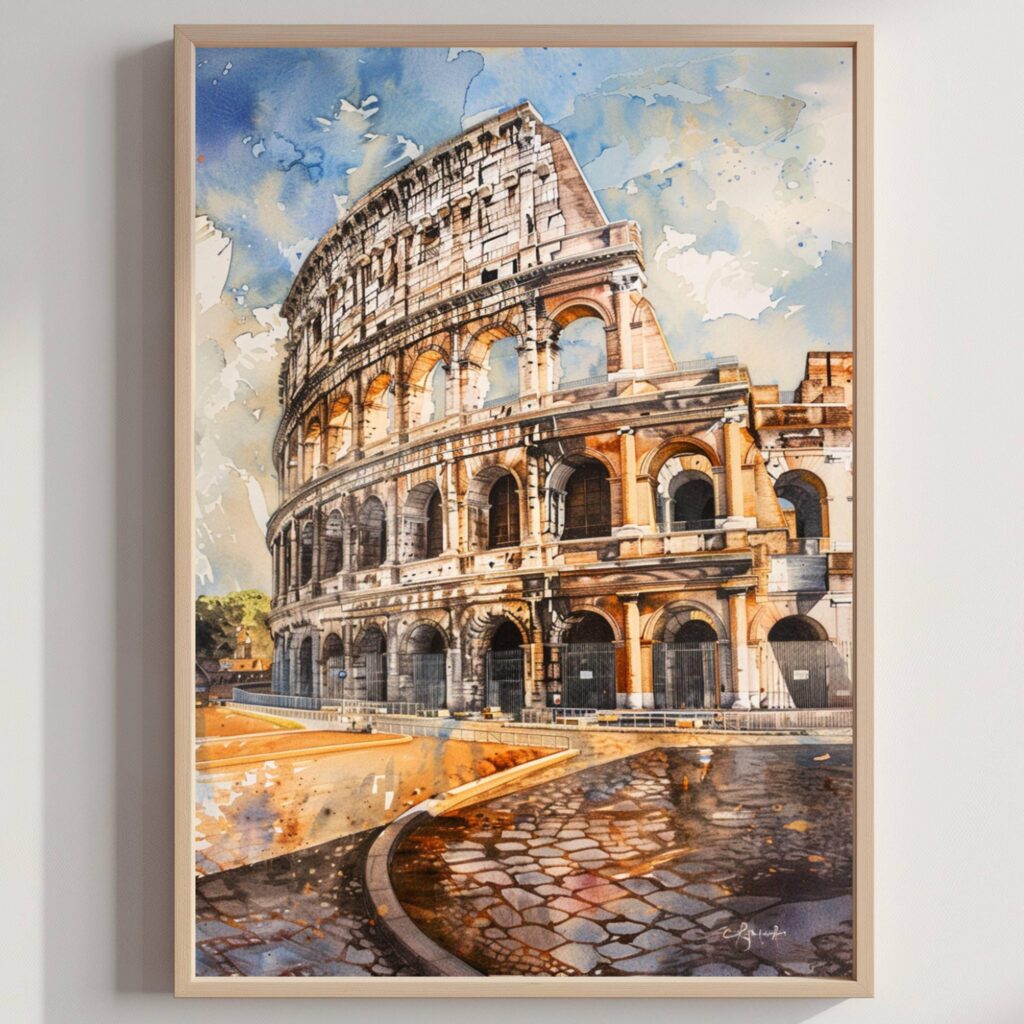
The layered arches and weathered travertine stone of the Colosseum give a watercolourist texture and history to work with in equal measure. We’ve captured that worn grandeur in our own Colosseum Rome Watercolor Print, painted first by hand and printed to order on archival paper, a small piece of Rome for a wall at home.
Built to bury one emperor’s excess and outlast nearly two thousand years of earthquakes, looting, and empire, the Colosseum remains standing largely on its own stubborn terms.