
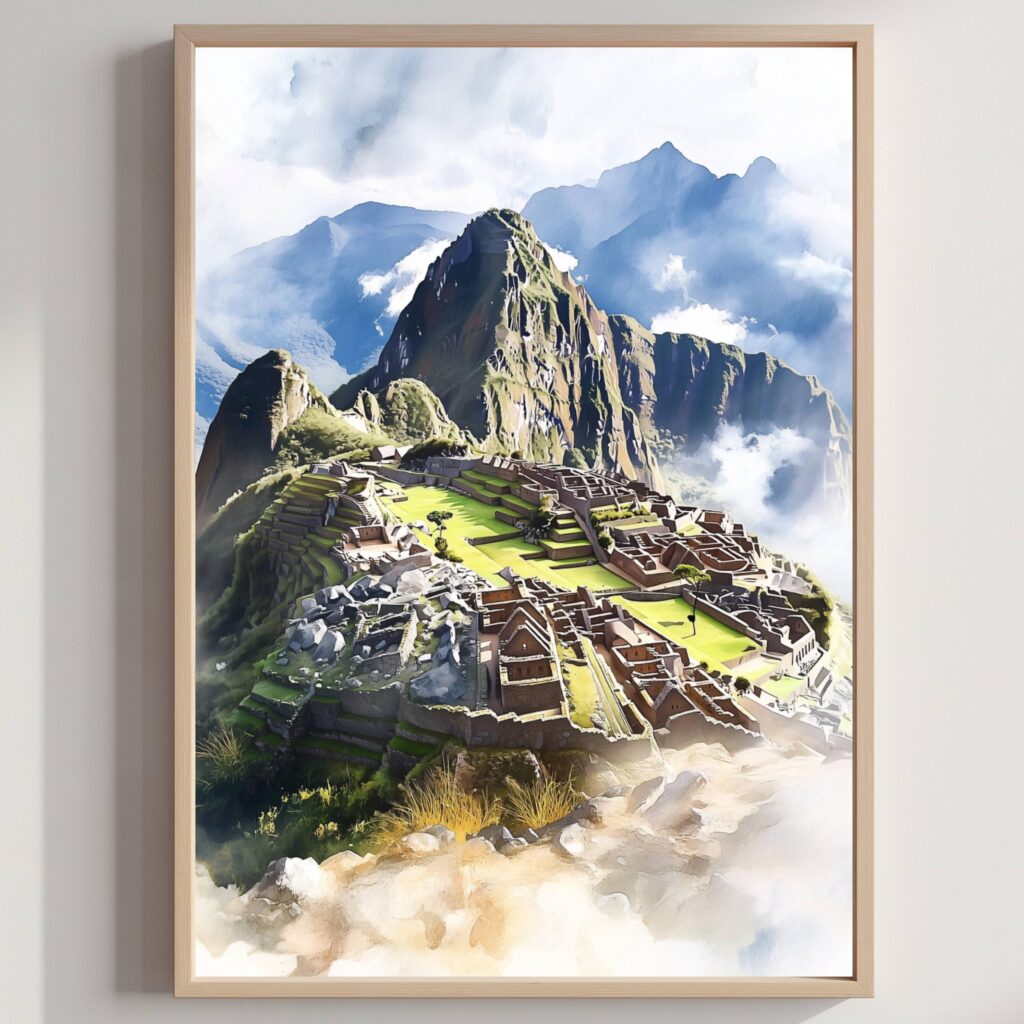
Machu Picchu’s survival owes everything to its location. Perched at 2,430 metres in the Peruvian Andes, hidden by cloud forest and accessible only by a narrow ridge trail, the Inca citadel was never discovered by the Spanish conquistadors who dismantled so much of the empire around it in the 16th century. While Cusco and other Inca cities were plundered and built over, Machu Picchu simply sat, largely forgotten by the outside world, for nearly 400 years.
It was brought to global attention in 1911 by American historian Hiram Bingham, who was led there by local Quechua farmers already familiar with the site, a reminder that “discovery,” in Machu Picchu’s case, meant something quite different to the people who had lived alongside it all along. Bingham had actually been searching for a different lost city, Vilcabamba, and stumbled onto something far better preserved instead.
Built Without Mortar, Still Standing
What makes Machu Picchu remarkable isn’t just its setting but its construction, the Inca builders shaped granite blocks to fit together so precisely that no mortar was needed, a technique so exact that a knife blade still can’t slip between many of the stones today. That precision has helped the site withstand centuries of Andean earthquakes with far less damage than more conventionally built structures nearby.
Most historians now believe it served as a royal estate for the Inca emperor Pachacuti, rather than a permanent city, likely occupied by a few hundred people at most, and abandoned around the time of the Spanish conquest, possibly due to smallpox spreading ahead of the conquistadors themselves.
Painting a City in the Clouds
The dramatic scale of Machu Picchu, terraced stone against impossibly steep, mist-wrapped peaks, is a natural fit for watercolour’s soft, atmospheric range. We’ve captured that Andean light in our own Machu Picchu Watercolor Print, painted first by hand and printed to order on archival paper, a small piece of the Andes for a wall at home.
Hidden by geography rather than secrecy, Machu Picchu remains one of the rare ancient sites that survived not through defence, but simply by being extraordinarily hard to find.